

Bombay High Court Stresses Against Illegal Detentions Amid Protests Targeting CEC Gyanesh Kumar
The Bombay High Court has made a firm statement regarding the practice of illegal detentions during protests, emphasizing that such actions will not be tolerated. This declaration came during a...

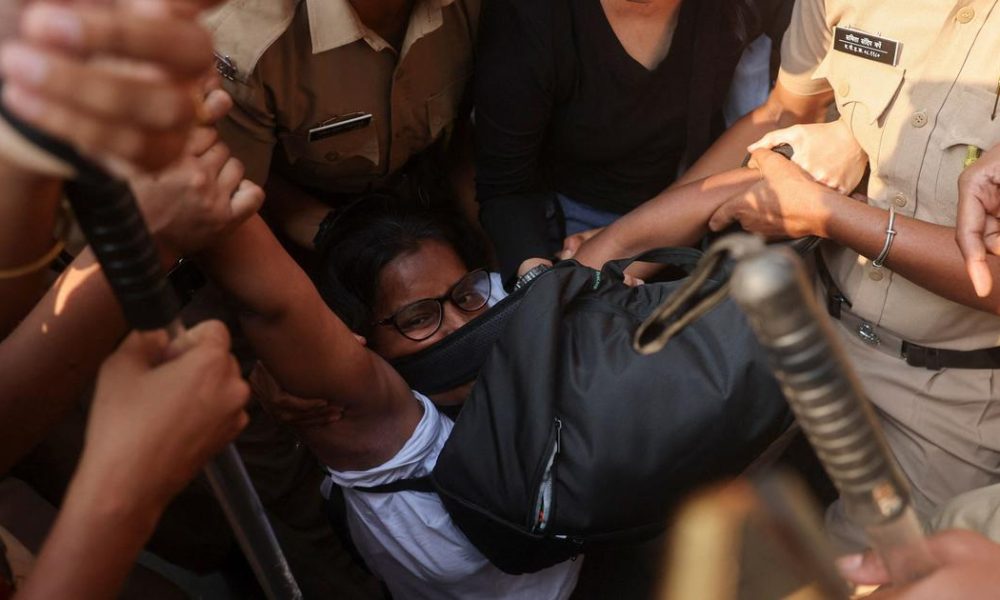
The Bombay High Court has made a firm statement regarding the practice of illegal detentions during protests, emphasizing that such actions will not be tolerated. This declaration came during a hearing on a petition that highlighted incidents of detentions involving protesters and bystanders during recent demonstrations against Chief Election Commissioner Gyanesh Kumar in Mumbai.
Reports indicate that approximately 600 individuals were detained on Saturday, followed by another 300 on Sunday. Protesters attempted to gather at Shivaji Park on Sunday but faced resistance from the police, who instead moved them to Dadar railway station. The situation escalated to the point where even pedestrians, merely walking in the vicinity, were allegedly detained. The petition further claimed that Mumbai Police had even gone to the homes of students who participated in previous youth protests earlier in July to take them into custody.
The petitioners argued that the actions of the Mumbai Police constituted an unconstitutional breach of rights, as individuals were apprehended without any lawful justification. They sought the court’s intervention to address what they described as the “indiscriminate” detention of peaceful demonstrators and innocent bystanders. Justice Mahesh Chandra Tripathi, presiding over the case, assured that the court would address the issue but reinforced the stance against illegal detentions by stating, “We will not permit this illegal detention.” The court has scheduled the next hearing for the following Monday.
These protests directed at Gyanesh Kumar are part of a broader national movement demanding his resignation, driven by concerns surrounding the Election Commission’s operations and its approach to the special intensive revision exercise (SIR). Since the revision process commenced in June 2025, it has come under scrutiny for its execution, with criticisms suggesting it might disenfranchise genuine voters.
As the political climate in India continues to evolve, the implications of these protests and the court’s stance on detentions will be closely monitored. The Bombay High Court’s commitment to uphold individual rights amid growing dissent reflects a critical moment in India’s democratic discourse, where the balance between law enforcement and civil liberties is increasingly being challenged.
Source: scroll.in




No Comment! Be the first one.