

Revisiting Gandhi’s Vision: The Four Pillars of Swaraj a Century Later
Mahatma Gandhi devoted the latter part of his life to the struggle for India’s independence from British rule. While he seldom articulated his vision for a free India in detail, a notable statement...

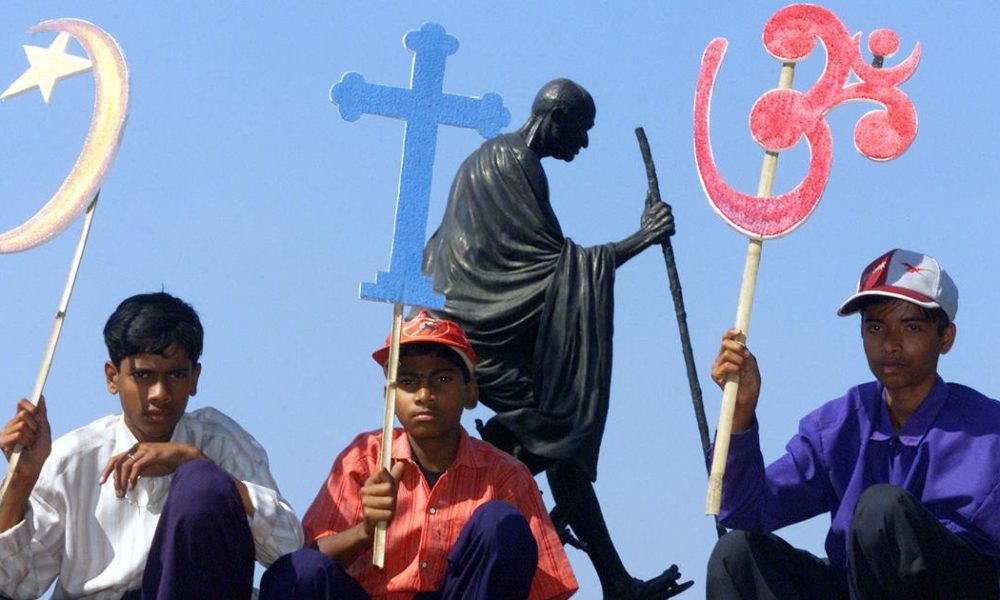
Mahatma Gandhi devoted the latter part of his life to the struggle for India’s independence from British rule. While he seldom articulated his vision for a free India in detail, a notable statement he made in March 1922 provides critical insights into his ideals. Gandhi famously outlined four foundational aspects of ‘swaraj’—or self-rule—that he believed essential for a stable and just society. He articulated that the ‘removal of untouchability, manufacture of khaddar, Hindu-Muslim unity, and cultivation of non-violence’ are the four unwavering pillars that must support the edifice of swaraj. Gandhi cautioned that the absence of any of these pillars could lead to its collapse.
Breaking down Gandhi’s statement reveals layers of meaning that resonate even today. The ‘removal of untouchability’ extends beyond the immediate goal of abolishing caste discrimination; it embodies a broader aspiration for social justice, encompassing gender equality and the fight against all forms of discrimination. Gandhi recognized that the existence of untouchability fundamentally compromised India’s claim to dignity and autonomy. He referred to this practice as a ‘sin’ and those who engaged in it as the ‘Dyers of Hinduism,’ underscoring its moral implications. Furthermore, his advocacy for women’s rights indicates a progressive approach, acknowledging that true freedom cannot be achieved while half the population remains oppressed.
Similarly, the emphasis on ‘khaddar’—the handspun cloth symbolizing self-reliance and economic independence—reflects Gandhi’s belief in the importance of self-sufficiency. He encouraged the use of khadi as a means to break free from colonial economic structures while promoting local craftsmanship. This call for economic autonomy remains relevant today as India faces the dual challenges of globalization and the need for sustainable local economies.
Gandhi’s vision of ‘Hindu-Muslim unity’ highlights the necessity for communal harmony in a diverse nation. The historical context of communal strife during India’s freedom struggle makes this pillar particularly poignant. Gandhi’s efforts to bridge the divide between Hindus and Muslims were not merely political maneuvers; they were reflective of his deep-seated belief in the inclusivity and unity necessary for a healthy democracy. In today’s polarized environment, this principle takes on renewed significance.
Lastly, ‘non-violence’ is not just a strategy for political struggle; it represents an ethical framework that advocates for peace and compassion in society. Gandhi’s philosophy of ahimsa transcended the fight against colonial oppression, promoting a life led by ethical principles that can guide interpersonal relationships and community interactions. In a world grappling with violence and conflict, the pursuit of non-violence remains a crucial endeavor.
As we reflect on Gandhi’s words and their relevance a century later, it is imperative to consider how these pillars can be reinforced in contemporary India. The quest for social justice, economic independence, communal harmony, and peaceful coexistence are challenges that persist. Thus, revisiting these foundational elements of swaraj can inspire a new generation to carry forward Gandhi’s legacy of a just and equitable society.
Source: scroll.in







No Comment! Be the first one.