

Supreme Court Acknowledges Validity of Pre-2026 Transgender Identity Cards, Clarifies Government’s Stance
In a significant ruling, the Union government informed the Supreme Court on Monday that transgender identity cards issued prior to the 2026 amendments of the Transgender Persons (Protection of...

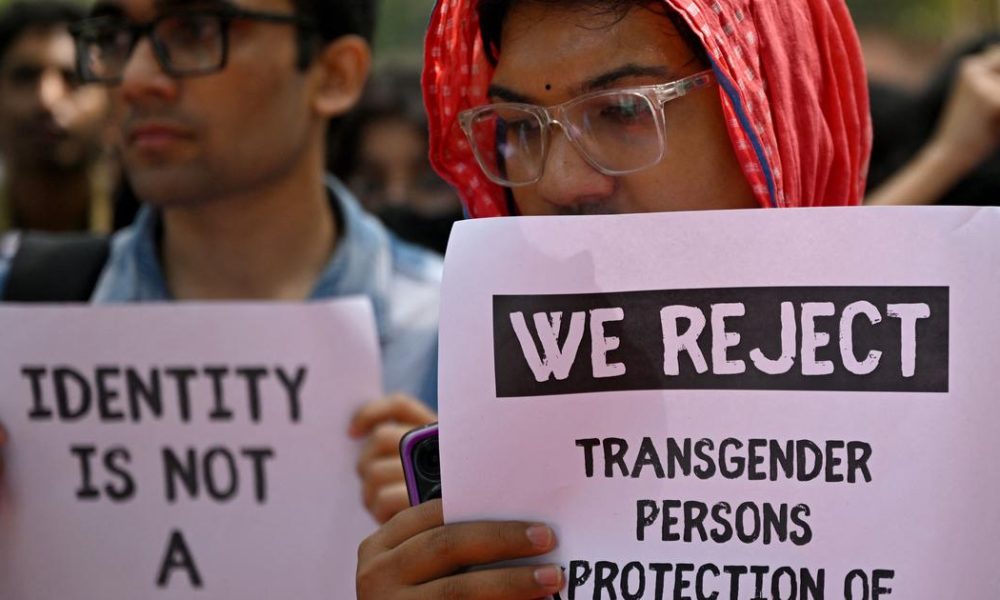
In a significant ruling, the Union government informed the Supreme Court on Monday that transgender identity cards issued prior to the 2026 amendments of the Transgender Persons (Protection of Rights) Act would remain valid. This announcement came in response to queries raised by a bench led by Chief Justice Surya Kant regarding the legal status of transgender individuals who obtained their identity cards before the recent legislative changes.
The amendments to the legislation, which were approved by Parliament in March 2023, have sparked controversy and concern within the transgender community. One of the most contentious aspects of the amendments is the redefinition of who qualifies as a transgender person. The changes remove the right to self-identify one’s gender, imposing stricter criteria based on biological or physiological traits, intersex variations, or socially recognized categories such as kinner, hijra, aravani, and jogta.
Additionally, the revised law mandates a medical evaluation and certification process for individuals seeking legal recognition of their gender identity. This places the authority to certify legal gender recognition in the hands of medical professionals who operate under a designated medical board, raising questions about the autonomy of individuals in defining their gender identity.
On August 3, a group of petitioners, which includes both transgender activists and individuals directly affected by the amendments, challenged the legality of the new provisions. They argued that previously issued identity cards should not be annulled and requested the Court to maintain the status quo regarding their validity. Enhancing the urgency of the matter, petitioner Ankani Biswas highlighted in an application filed on August 10 that they received their transgender identity card under the original 2019 Act only on February 2, 2023.
The ongoing dialogue surrounding the legal recognition of transgender individuals in India reflects broader societal debates about gender identity and rights. As the nation grapples with these critical issues, the Supreme Court’s ruling provides some reassurance to those who fear losing their rights under the new amendments while prompting further discussion on how India can foster a more inclusive environment for its transgender population.
Source: scroll.in







No Comment! Be the first one.