

AISA Leader Neha Bora Refuses to Sign Peace Bond Following Court Ruling
Neha Bora, a prominent student leader from the All India Students’ Association (AISA), made a significant statement on Saturday, asserting her refusal to sign a peace bond mandated by a special...

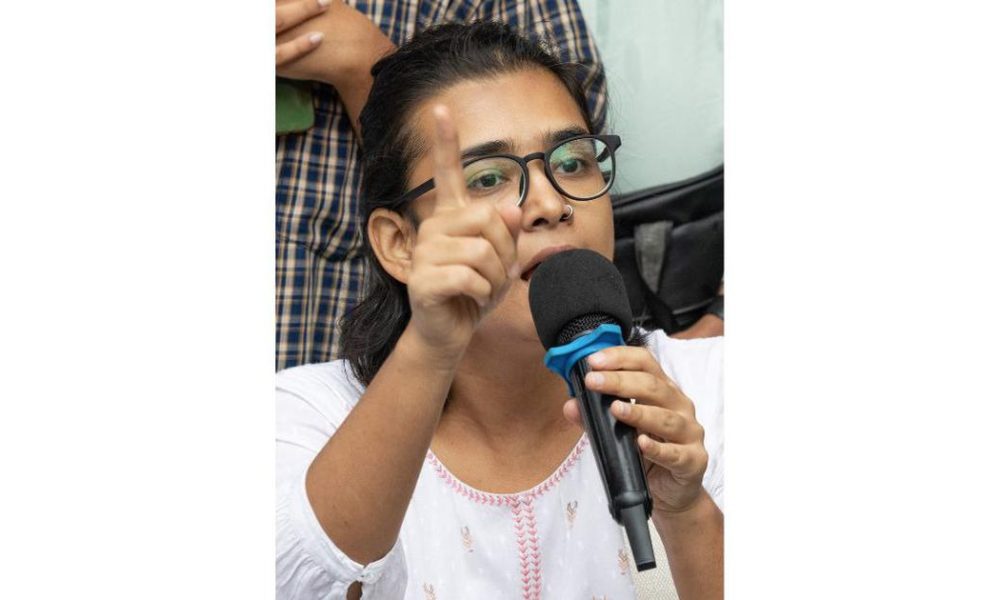
Neha Bora, a prominent student leader from the All India Students’ Association (AISA), made a significant statement on Saturday, asserting her refusal to sign a peace bond mandated by a special executive magistrate. This announcement follows the Delhi High Court’s dismissal of her petition challenging the order to sign the bond, which was issued as a precautionary measure.
Bora, who was detained during a flash protest near Barakhamba Road on October 16, raised her voice against the Chief Election Commissioner Gyanesh Kumar, demanding his resignation. Her actions, part of a larger movement among students, reflect growing dissatisfaction with electoral processes in the country. After her detainment, Bora claims she was taken to an undisclosed location before being moved to the RK Puram Police Station, where she spent the night before her release early the next morning.
The special executive magistrate had instructed her and other protestors to submit a personal bond of ₹10,000 as a condition for maintaining peace during an ongoing inquiry into the protests. Addressing reporters at a press conference held at the Communist Party of India (Marxist-Leninist) Liberation’s office in Delhi, Bora questioned the rationale behind the peace bond, asking, “Whose peace are we being asked to uphold?” She emphasized that the protests against Kumar should not compromise the fundamental right to dissent, a principle she and her colleagues hold dear.
Bora’s defiance is indicative of a larger trend among student activists in India, who have been increasingly vocal against perceived government overreach and suppression of dissent. The issue of electoral integrity and the role of the Election Commission have become focal points for many, leading to protests that challenge not only specific individuals but the broader political landscape as well.
As the situation unfolds, the implications of Bora’s stance and the ongoing protests remain to be seen. The AISA and its supporters continue to rally for change, standing firm in their belief that dissent is a vital part of a healthy democracy. With the court’s recent ruling and Bora’s refusal to comply with the peace bond, the spotlight is now on the government and its response to these continuing calls for accountability and reform.
Source: scroll.in







No Comment! Be the first one.