

Understanding the Impact of Economic Policies on Indian Households: Insights from the 2026 Nobel Prize in Economics
The recent awarding of the 2026 Nobel Prize in Economic Sciences to Robert E. Hall and Michael Woodford has profound implications for understanding the Indian economy. Their groundbreaking research...

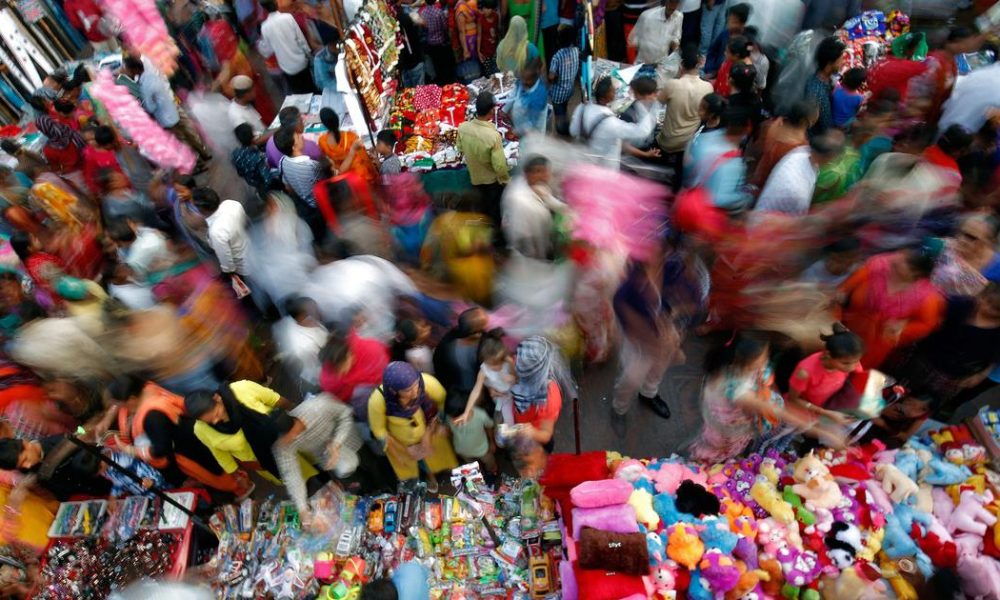
The recent awarding of the 2026 Nobel Prize in Economic Sciences to Robert E. Hall and Michael Woodford has profound implications for understanding the Indian economy. Their groundbreaking research focuses on the microeconomic foundations of macroeconomic stability, highlighting the crucial link between individual choices and broader economic trends.
At the core of their work lies a fundamental question: How do the decisions made by households and businesses influence the overall economy? This inquiry is particularly relevant in the context of a country like India, where diverse economic conditions can lead to vastly different experiences for citizens. For instance, a small business contemplating expansion and a family struggling to keep up with rising food prices are both grappling with the same economic landscape, yet their challenges are uniquely individual.
Recent statistics underscore the urgency of this discussion. In September, India witnessed a surge in retail inflation, climbing to 5.54% from August’s 4.83%. Food inflation was even more concerning, reaching 7.74%. These figures reveal a disconcerting reality: the burden of inflation is not uniformly distributed across the country. Rural populations experienced a headline inflation rate of 6.08%, significantly higher than the 4.88% reported in urban areas. Such discrepancies illustrate how a single national inflation figure can mask the diverse economic realities faced by various segments of the population.
For many Indian families, rising prices necessitate difficult decisions, such as delaying purchases or cutting back on essential items. In contrast, businesses must evaluate the potential impact of these economic conditions on their investment strategies. The work of Hall and Woodford serves as a reminder that effective public policy must take into account the real-world implications of economic theories. By understanding the expectations, choices, and constraints of individuals and firms, policymakers can develop more nuanced strategies that address the specific needs of their constituents.
As India grapples with these economic challenges, the insights gleaned from the Nobel laureates’ research can help illuminate pathways for more effective economic management. In an ever-evolving global landscape, recognizing the interplay between individual decisions and macroeconomic stability will be crucial for fostering a robust and inclusive economy.
Source: scroll.in







No Comment! Be the first one.