

Delhi on High Alert: Major Travel Disruptions Ahead of Protests Against Chief Election Commissioner
In a significant move, authorities in Delhi have implemented strict travel restrictions ahead of a planned protest at Jantar Mantar against Chief Election Commissioner Gyanesh Kumar. The Indian...

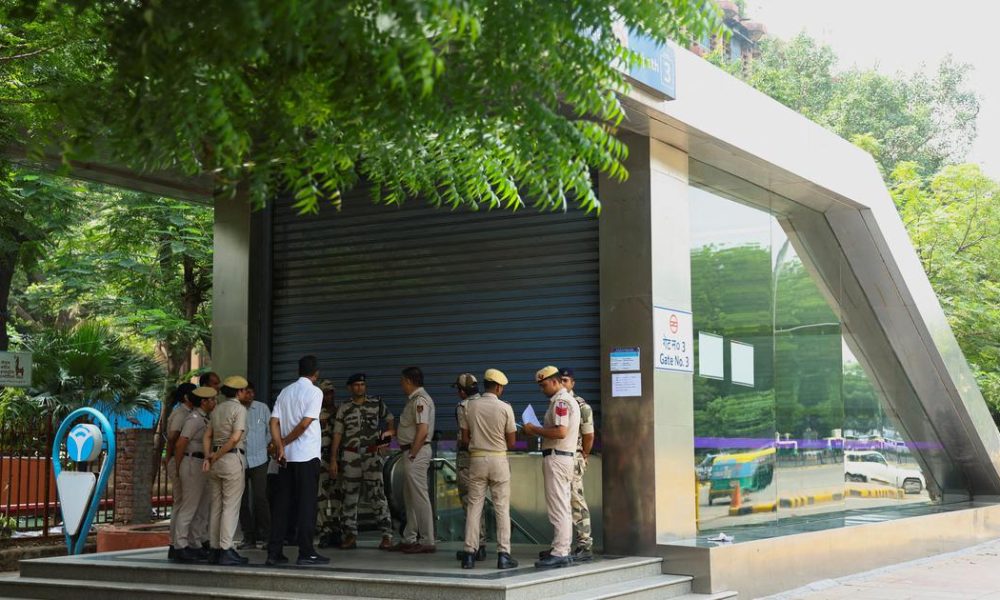
In a significant move, authorities in Delhi have implemented strict travel restrictions ahead of a planned protest at Jantar Mantar against Chief Election Commissioner Gyanesh Kumar. The Indian Railways has announced the cancellation of several trains arriving at key stations in the national capital, while the local police have ordered the closure of 57 metro stations in anticipation of the demonstration.
The protest is scheduled for Saturday, and police have preemptively denied permission for the gathering, warning potential participants that legal repercussions may follow. To maintain order, about 23,000 security personnel will be deployed throughout the city, including a contingent of 7,000 Central Reserve Police Force (CRPF) members being summoned from West Bengal and Chhattisgarh.
In a related development, a petition has been submitted to the Supreme Court challenging the railway’s decision to cancel trains bound for Delhi, the proposed metro station shutdown, and the rumored suspension of internet services within the city. Reports indicate that the Indian Railways has cancelled all mail and express trains scheduled to arrive at New Delhi Railway Station and Hazrat Nizamuddin Railway Station from 4 AM until 2 PM on Saturday, citing expected road congestion as the reason for the cancellations. This disruption will also affect trains departing from their respective starting points after 2 PM on Friday.
The Delhi Metro Rail Corporation has been instructed to close entry points at various stations as a precautionary measure against the planned protest. This decision has sparked concerns regarding the accessibility of public transport for daily commuters and residents.
As tensions rise in the capital, the situation is being closely monitored by both government and law enforcement agencies, who aim to balance public safety with the right to peaceful assembly. The protests against the Chief Election Commissioner are seen as a reflection of growing discontent within certain political circles, as various groups voice their grievances regarding electoral processes and governance.
Source: scroll.in





No Comment! Be the first one.