

Reviving the Legacy of Scientific Innovation: The Pioneers of Colonial India
In the early 20th century, a remarkable transformation was quietly unfolding in colonial India, driven by a small yet passionate group of scientists determined to cultivate a self-reliant scientific...

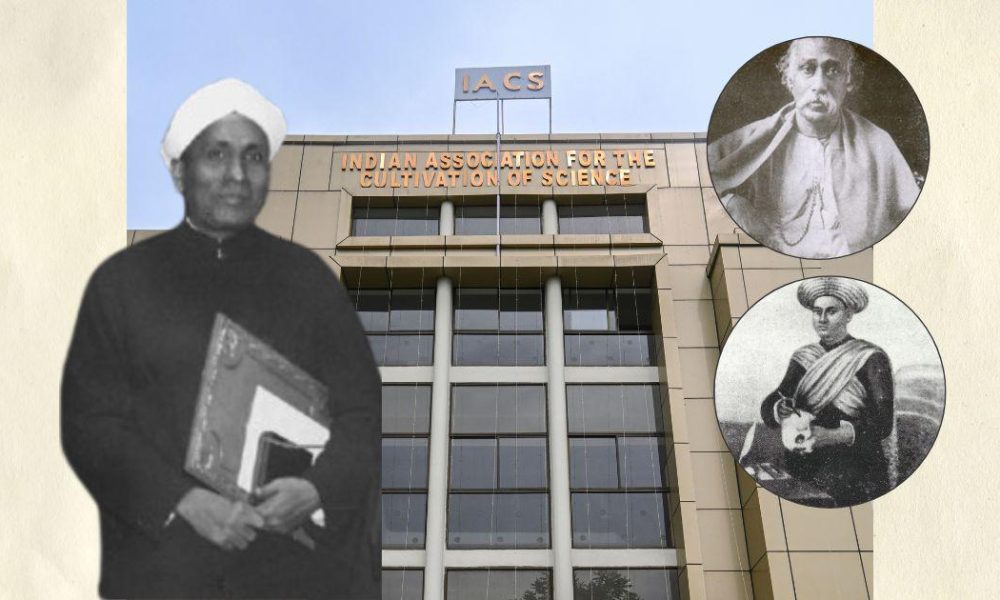
In the early 20th century, a remarkable transformation was quietly unfolding in colonial India, driven by a small yet passionate group of scientists determined to cultivate a self-reliant scientific culture. Among them was Chandrasekhar Venkata Raman, a young accountant by profession, who in 1907 stepped into the laboratory of the Indian Association for the Cultivation of Science (IACS) in Calcutta. Despite the constraints imposed by British colonial rule, which limited professional opportunities in scientific fields, Raman’s fervor for science led him to embark on groundbreaking experiments during his free time.
The IACS, founded in 1876 by Dr. Mahendralal Sircar, had a clear mission: to popularize science and encourage Indian scholars to engage in research at a time when opportunities were severely lacking. It provided a unique platform for intellectual exploration, and soon, Raman, who later became the secretary of IACS, teamed up with colleague KS Krishnan to delve into the fascinating world of light. Their pioneering experiments would ultimately lead to a discovery that would change the landscape of physics.
Raman’s research would yield what is now famously known as the Raman Effect, a phenomenon describing the change in wavelength of light when it is scattered by molecules. This groundbreaking work not only enhanced the understanding of molecular interactions but also laid the groundwork for numerous applications in chemistry and biology. His exceptional contributions to science were recognized in 1930 when he became the first Asian to be awarded the Nobel Prize in Physics, a monumental achievement that underscored the potential of Indian scientists even in the face of colonial oppression.
The legacy of the Indian Association for the Cultivation of Science extends beyond Raman’s individual achievements. It represented a collective effort to foster an environment that valued scientific inquiry and research among Indians. In a period when education and intellectual pursuits were often relegated to the margins, IACS stands out as a beacon of hope and innovation. The vision of Dr. Sircar and his contemporaries was to inspire a generation of Indian scientists who would carve out a space for themselves in the global scientific community.
Today, as we look back at the contributions of these pioneering figures, it is essential to acknowledge the cultural and historical context in which they operated. Their relentless pursuit of knowledge not only contributed to India’s scientific heritage but also sowed the seeds for future advancements in various fields. As the nation continues to forge ahead in the realm of science and technology, the spirit of self-reliance and innovation championed by these early scientists remains a source of inspiration for contemporary researchers.
Source: scroll.in






No Comment! Be the first one.