

Massive Protests Erupt in Delhi Demanding Economic Criteria for Quotas
In a significant demonstration of public sentiment regarding reservation policies, thousands of individuals gathered at Jantar Mantar in Delhi on Friday to voice their opposition to caste-based...

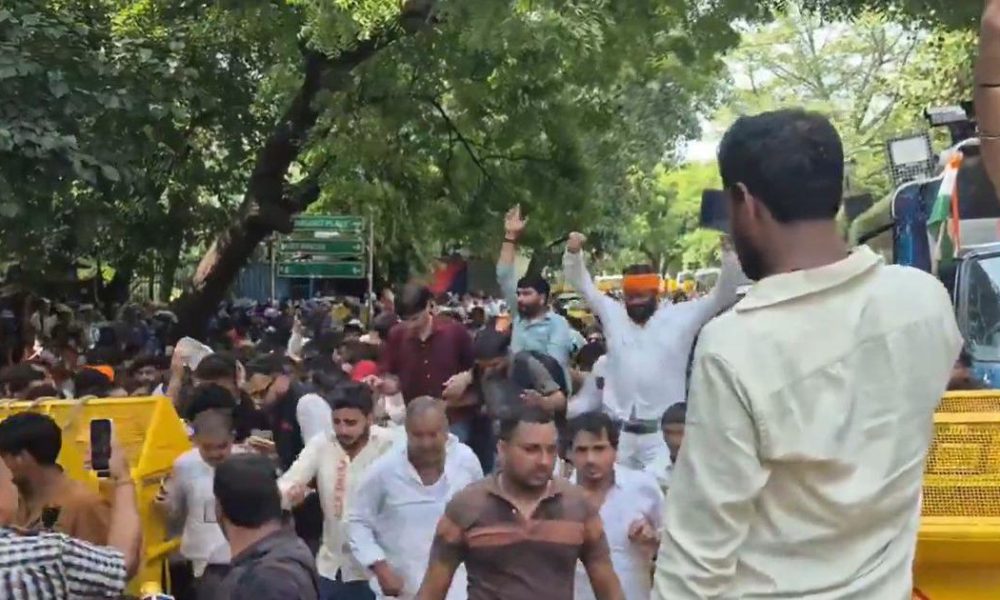
In a significant demonstration of public sentiment regarding reservation policies, thousands of individuals gathered at Jantar Mantar in Delhi on Friday to voice their opposition to caste-based quotas in education and government employment. The protests were organized by a group known as the Reservation Hatao Andolan, which advocates for a system prioritizing economic status over caste lineage.
Although the Delhi Police had initially sanctioned the gathering to take place at Ramlila Maidan, many protesters chose to assemble at Jantar Mantar, prompting law enforcement to intervene. The police, along with the Rapid Action Force, detained several individuals for contravening restrictions on public assemblies, a move that stirred further unrest among demonstrators.
Protesters predominantly consisted of men from various backgrounds, all united under the common goal of pushing for a re-evaluation of India’s reservation policies. They carried placards and saffron flags, loudly articulating their demands. One protester, representing the Akhil Bhartiya Kshatriya Mahasabha, emphasized the need for socio-economic factors to be the basis for government assistance, stating, “A poor individual, regardless of their caste, should receive help for education and other essential needs.” This sentiment echoed throughout the gathering, with many participants calling for a more equitable approach.
Among the various demands raised, some protesters advocated for an income-based prioritization within the existing quotas for Scheduled Castes (SC), Scheduled Tribes (ST), and Other Backward Classes (OBC). This shift, they argue, would ensure that financial hardship is the main criterion for allocating benefits, rather than heritage or caste identity.
The backdrop of this protest is a long-standing debate in India regarding the effectiveness and fairness of the reservation system, which was originally established to uplift historically marginalized communities. Critics argue that the current system often overlooks economically disadvantaged individuals from higher caste backgrounds, thereby perpetuating inequality in access to opportunities. As discussions surrounding social justice and economic equity continue to evolve, the protests at Jantar Mantar serve as a reminder of the growing demand for a more inclusive approach to governmental support.
Source: scroll.in





No Comment! Be the first one.