

Floods in Assam Claim 100 Lives as Relief Efforts Intensify
Assam is grappling with a severe flood crisis, as the death toll has tragically reached 100, with the state recording two additional fatalities in the last 24 hours. The State Disaster Management...

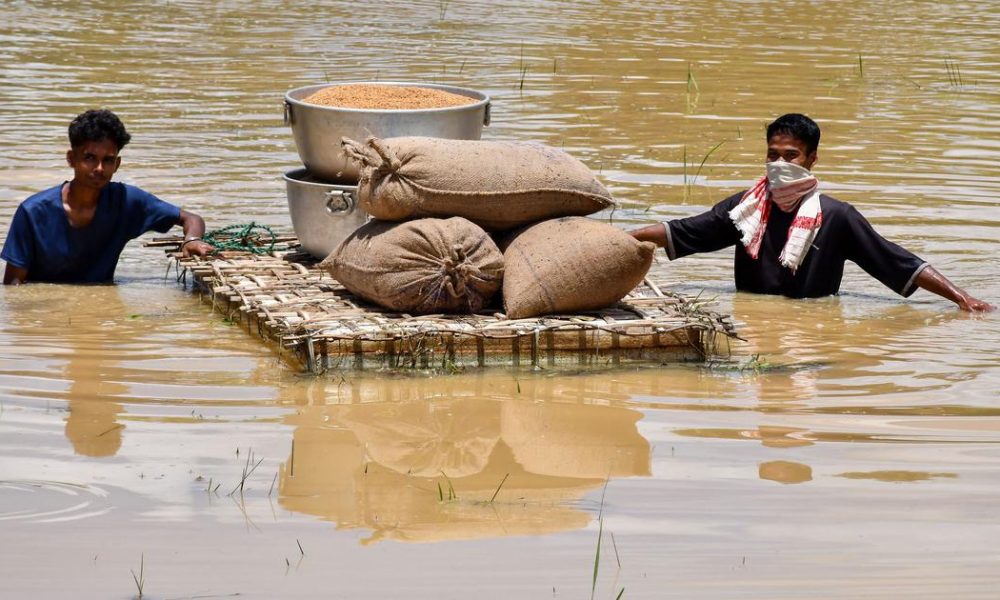
Assam is grappling with a severe flood crisis, as the death toll has tragically reached 100, with the state recording two additional fatalities in the last 24 hours. The State Disaster Management Authority (SDMA) provided this grim update on Sunday, highlighting the extensive impact of the floods across the region.
Approximately 140,000 individuals have been adversely affected by the flooding, which has engulfed ten districts: Golaghat, Sivasagar, Hojai, Darrang, Lakhimpur, Jorhat, Karbi Anglong, Charaideo, Nagaon, and Biswanath. Among these, Golaghat is the hardest hit, with roughly 70,000 residents feeling the brunt of the disaster. Sivasagar follows closely, with nearly 40,000 individuals affected, and Jorhat reporting impacts on over 16,000 people.
Rising water levels in local rivers, such as the Dhansiri in Golaghat and Numaligarh, along with the Kushiyara river at Sribhumi, have exceeded danger marks, prompting cautionary advisories from officials. “Due to the continuous rise in the water levels of the Dhansiri in Golaghat district, people are urged to keep a safe distance from the river,” an official from the disaster management authority stated.
In response to the situation, around 49,100 displaced individuals are currently residing in 125 relief camps and distribution centers set up across six districts. Authorities are mobilizing resources to provide food, medical assistance, and other critical support to those affected. However, the continuing rainfall and fluctuating river conditions complicate relief efforts, with the potential for further damage lingering.
This flood disaster is a stark reminder of Assam’s vulnerability to natural calamities, particularly during the monsoon season. As the state embarks on recovery efforts, discussions surrounding long-term solutions to improve flood resilience are imperative. The need for infrastructure investment, forest management, and effective water management strategies are crucial to mitigate similar disasters in the future.
Source: scroll.in







No Comment! Be the first one.