

Gujarat’s Pastoral Nomads Face Disconnection from Traditional Grazing Grounds
In the arid landscapes of Kachchh, Gujarat, the age-old tradition of pastoral nomadism is witnessing a significant shift as families like that of Nasibi Shermamad Jat, 55, find their ties to...

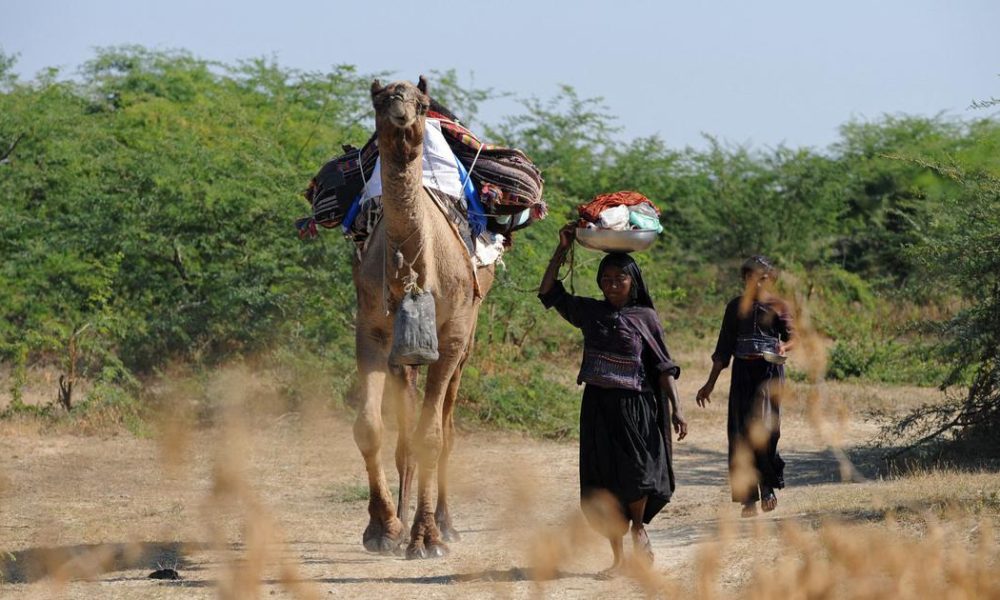
In the arid landscapes of Kachchh, Gujarat, the age-old tradition of pastoral nomadism is witnessing a significant shift as families like that of Nasibi Shermamad Jat, 55, find their ties to traditional grazing lands, known as rakhals, weakening. Growing up, Nasibi fondly remembers accompanying her mother to these grass preserves, where they would let their buffaloes graze amidst the sparse tree cover and shrubs characteristic of the region. Her recollections include gathering tamarind and grass, especially during challenging drought seasons.
After her marriage, her connection to the rakhals remained strong, as she continued to visit these lands with her husband and their camels. The rakhals, designed primarily for the grazing of livestock, are a unique feature of Kachchh’s arid environment, characterized by its sandy browns and beiges, creating a striking savannah-like backdrop. Nasibi’s village, Dhragavandh, located near the India-Pakistan border, is home to the Maldhari community, which has thrived on this pastoral lifestyle. Today, her family owns 30 camels and six buffaloes, and they rely heavily on the rakhals that surround their village, including four found within the Narayan Sarovar Sanctuary.
The historical significance of rakhals dates back to the 1880s when they were established as grass preserves to provide fodder for the animals of the ruling classes and the Maldharis who grazed their livestock there. The royal court collected revenues from these lands by permitting the Maldhari community to use them for grazing, while the cutting down of trees was strictly prohibited. This practice not only sustained the local economy but also preserved the delicate ecosystem of the region. However, the landscape has begun to change drastically.
With modernization and a growing population, the pressures on these traditional pastoral lands have intensified. Increased agricultural activities, urbanization, and climate change are contributing to the diminishing availability of grazing areas. For families like Nasibi’s, this shift poses serious challenges, as they struggle to maintain their ancestral livelihoods and the cultural practices associated with them. The loss of access to traditional rakhals signifies more than just a change in grazing locations; it also threatens the very identity of the Maldhari community, which has relied on these lands for generations.
As the future of pastoral nomadism hangs in the balance, the need for sustainable practices and protective measures for these grazing lands becomes increasingly urgent. The Maldhari community, with its rich heritage and deep-rooted traditions, seeks not only to preserve their way of life but also to adapt to the changing environmental conditions that threaten their existence.
Source: scroll.in





No Comment! Be the first one.