

BJP’s Unexpected Embrace of Bengal’s Partition: A Political Perspective
In a surprising turn of events, the Bharatiya Janata Party (BJP) has found itself celebrating the partition of Bengal, a historical event rooted in the controversial communal divisions of 1947. This...

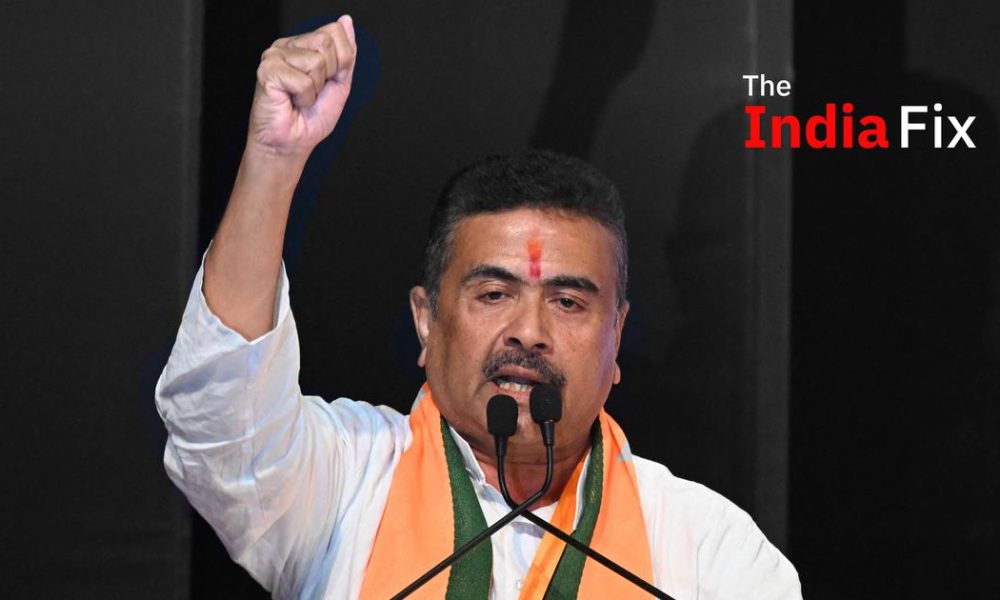
In a surprising turn of events, the Bharatiya Janata Party (BJP) has found itself celebrating the partition of Bengal, a historical event rooted in the controversial communal divisions of 1947. This shift has drawn attention and sparked debates within the political landscape of West Bengal, a state that itself emerged from the tumultuous legacy of partition.
The backdrop to this unexpected endorsement is the notion put forth by the party’s leaders that the concept of a united Bengali identity, one that transcends religious divides, is merely a myth. Recently, West Bengal minister Swapan Dasgupta articulated this viewpoint, suggesting that the idea of a “composite cultural community” is unfounded. His comments echo sentiments that align with the BJP’s broader nationalist narrative, which often seeks to emphasize differences rather than commonalities among communities.
The two-nation theory, famously articulated by Muhammad Ali Jinnah during the Lahore Resolution of 1940, posited that Hindus and Muslims belonged to irreconcilably different nations, a belief that ultimately played a pivotal role in the partition of British India. Jinnah’s speech was not only one of historical significance but also laid the groundwork for the creation of Pakistan seven years later, resulting in one of the bloodiest chapters in South Asian history. The repercussions of this division continue to be felt across the region, and now, over seven decades later, the BJP seems to be revisiting these contentious narratives.
This celebration of partition by the BJP raises critical questions about identity and community in contemporary West Bengal. As the party positions itself in a state with deep historical roots in the partition, it may be attempting to solidify its base among communities that feel marginalized or overlooked in the current political climate. By invoking the partition discourse, the BJP is possibly looking to reinforce a sense of distinct identity among its supporters, particularly as it navigates the complex demographics of West Bengal.
Furthermore, this ideological stance may also be a strategic move to counteract the narrative of unity that has historically defined Bengali culture. The BJP’s approach highlights the ongoing political effort to redefine historical events in a way that aligns with its vision of nationalism. As the state gears up for future elections, how the electorate responds to this celebration of a divisive past will be crucial in shaping the political dynamics of West Bengal.
Source: scroll.in



No Comment! Be the first one.