

Exploring the British Influence on Kashmir’s Accession to India: Insights from a New Book
The history of Kashmir’s accession to India has long been a contentious issue, with various narratives vying for attention. One of the more provocative assertions is that British involvement...

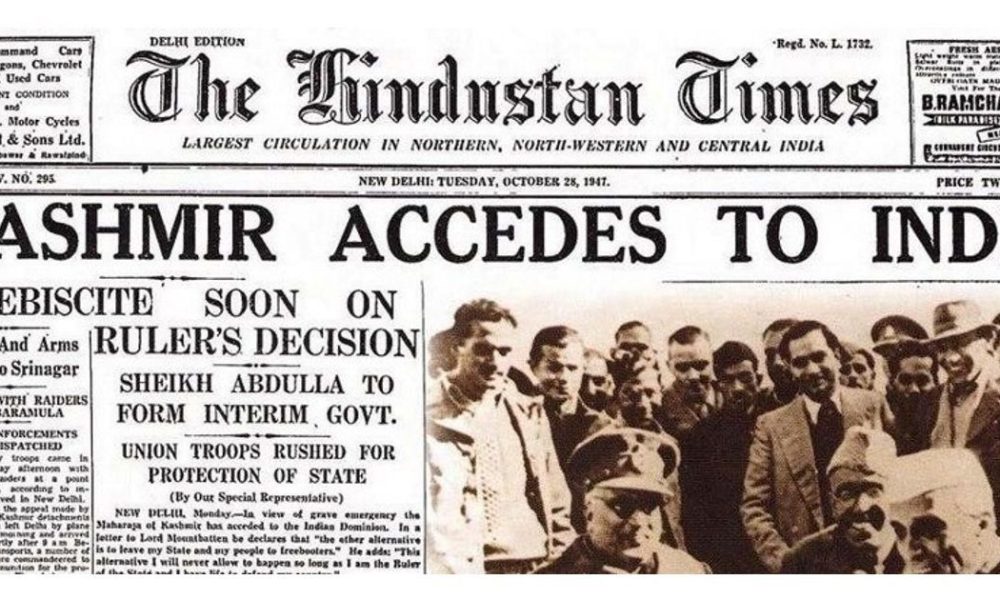
The history of Kashmir’s accession to India has long been a contentious issue, with various narratives vying for attention. One of the more provocative assertions is that British involvement shaped the decision for Kashmir to join India rather than Pakistan. This claim is explored in depth in Alastair Lamb’s new book, “Kashmir: A Disputed Legacy,” where he delves into the strategic motivations of the British as they withdrew from the subcontinent.
Pakistan has maintained that Lord Mountbatten, the last Viceroy of India, along with the British government, engaged in a conspiracy to facilitate Kashmir’s integration into India. According to this perspective, the British were motivated by their strategic interests in the region, particularly concerning the Soviet Union’s activities in Central Asia. It was believed that a strong and stable India would serve as a better safeguard for British interests in the region than a potentially less predictable Pakistan.
Lamb’s analysis suggests that the British were particularly concerned about monitoring Soviet expansion, which necessitated the retention of certain key territories. He highlights the importance of Gilgit and Hunza, regions that fall within the northernmost parts of Kashmir, as critical areas for observing Soviet movements. In a post-colonial context, this desire for strategic oversight influenced the decisions made during the tumultuous period of India’s Partition.
One pivotal moment cited by Lamb is Mountbatten’s decision in 1947 to return Gilgit and Hunza to the Maharaja of Kashmir, rather than transferring these areas to Pakistan, despite the 60-year lease that had been established with Maharaja Hari Singh. Lamb argues that this choice appears to align more closely with the interests of India and contradicts the principles laid out in the India Independence Act. This act was intended to delineate how territories should be allocated between the newly formed nations based on religious majorities.
The accusations stemming from Pakistan concerning British influence were first brought to the attention of the United Nations Security Council in January 1948. At that time, Pakistan was defending itself against India’s claims regarding the illegal occupation of Kashmir. This ongoing debate reflects the deep-seated tensions and complexities surrounding the region, as well as the historical context that continues to shape the narrative today.
Source: scroll.in







No Comment! Be the first one.