

Supreme Court Dismisses Challenge Against Election Commission’s Transfers in West Bengal
The Supreme Court of India has turned down a petition challenging the Election Commission’s (EC) directive to transfer several key officials in West Bengal in light of the upcoming Assembly...

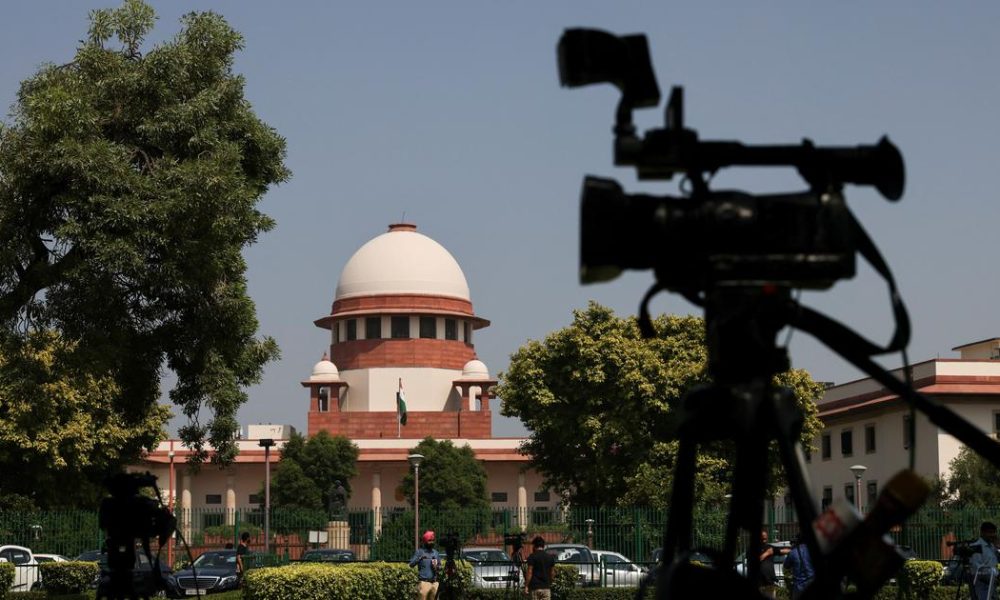
The Supreme Court of India has turned down a petition challenging the Election Commission’s (EC) directive to transfer several key officials in West Bengal in light of the upcoming Assembly elections. The decision, announced on Thursday, has sparked discussions surrounding the autonomy of the Election Commission and the implications of such transfers on state governance.
A bench comprising Chief Justice Surya Kant and Justices Joymalya Bagchi and Vipul Pancholi pointed out that such administrative reshuffles are not uncommon during election seasons. “It happens everywhere,” the bench remarked, emphasizing that this is not an isolated incident. However, they acknowledged the legal concern raised by the petitioner regarding the EC’s failure to consult the state government before executing these transfers. The court noted, “We are not intervening in it as of now. The question of law is kept open,” indicating that there may be room for further discussion on the matter.
The Election Commission’s order, which came shortly after the announcement of the Assembly election schedule on March 15, affected high-ranking officials, including the chief secretary, the home secretary, and the director general of police, as well as numerous IAS and IPS officers. The reshuffling has been criticized for potentially disrupting the functioning of the state administration during a crucial electoral period.
A petition filed in the Calcutta High Court argued that the extensive reshuffles represent an arbitrary exercise of power under Article 324 of the Indian Constitution, which grants the EC the authority over the supervision, direction, and control of elections. The petitioner contended that the significant changes in personnel could interfere with governance and disrupt the day-to-day operations within the state.
Moreover, the argument was made that these actions could undermine the principles of federalism, raising concerns about the balance of power between central and state authorities. As the political climate heats up in West Bengal, where allegations of partisanship and electoral manipulation frequently surface, the implications of these transfers could have far-reaching consequences.
Source: scroll.in







No Comment! Be the first one.