

Saudi Arabia, Turkey, and Pakistan Forge Defence Pact: A Shift in Global Alliances
The recent signing of a mutual defence agreement between Saudi Arabia, Turkey, and Pakistan on August 7 has raised eyebrows and stirred discussions among international observers. Dubbed by some as...

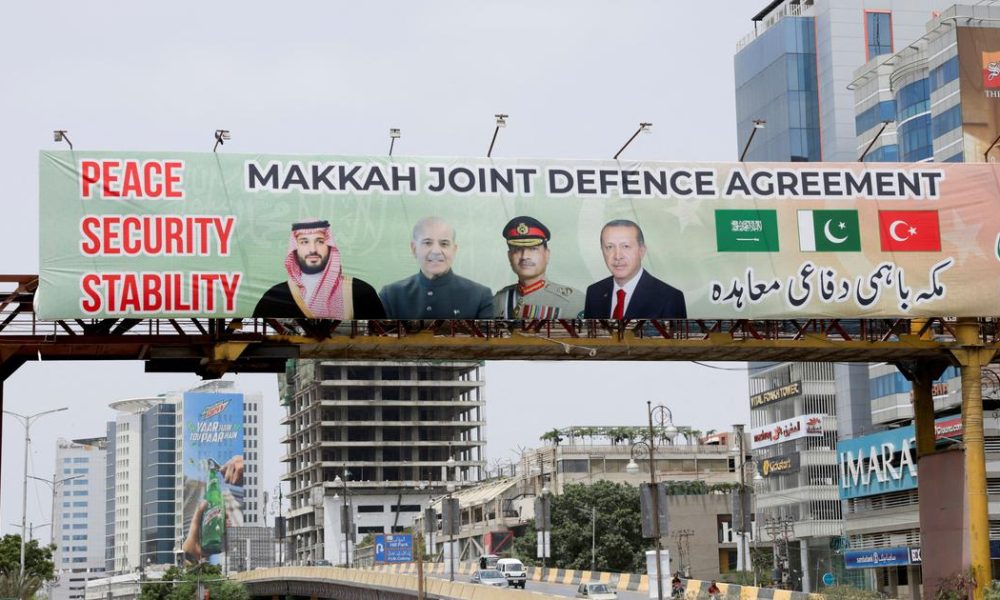
The recent signing of a mutual defence agreement between Saudi Arabia, Turkey, and Pakistan on August 7 has raised eyebrows and stirred discussions among international observers. Dubbed by some as the ‘Islamic NATO,’ the Mecca Joint Defence Agreement asserts that an armed attack on any member state will be considered an assault on all three nations. This pact has not only drawn attention in the Middle East but has also sent ripples through Washington, where the implications for American influence and reliability are being closely examined.
Unlike NATO, which is a long-established military alliance with a well-defined framework, this new agreement signals a shift among key players in the Islamic world as they seek to bolster their collective security. It is noteworthy that this collaborative effort arises from the growing concerns over U.S. foreign policy and its reliability as an ally. The current geopolitical landscape has prompted these countries to reassess their partnerships, especially in light of recent conflicts.
The agreement brings together three powerful nations, each boasting unique military capabilities. Turkey, a NATO member, possesses the second-largest army in the alliance and has developed a cutting-edge drone industry that has significantly altered modern warfare. Saudi Arabia contributes significant financial resources, being one of the wealthiest nations in the Gulf, while Pakistan brings a formidable military force, complete with a nuclear arsenal. The combined strengths of these countries could potentially reshape regional dynamics.
This pact is not an isolated development; it builds on previous collaborations, notably a Saudi-Pakistani agreement reached in September 2025. This earlier agreement was signed shortly after Israeli airstrikes on Hamas targets in Doha, underscoring the urgency of mutual security arrangements in a volatile region. As tensions rise, the urgency of establishing a united front against external threats becomes increasingly apparent.
In a world where alliances are continuously evolving, the formation of this pact among Saudi Arabia, Turkey, and Pakistan could signify a crucial turning point in international relations. The decision to come together reflects a collective approach to security that may shape the future of military cooperation among Muslim-majority nations. As these countries strengthen their ties, the balance of power in the region—and even globally—could be profoundly altered.
Source: scroll.in





No Comment! Be the first one.