

India Scrutinizes Pakistan-Saudi Arabia-Türkiye Defense Pact Amid Regional Tensions
India is actively evaluating the potential consequences of a recent defense agreement forged between Pakistan, Saudi Arabia, and Türkiye, as announced by the Ministry of External Affairs (MEA) on...

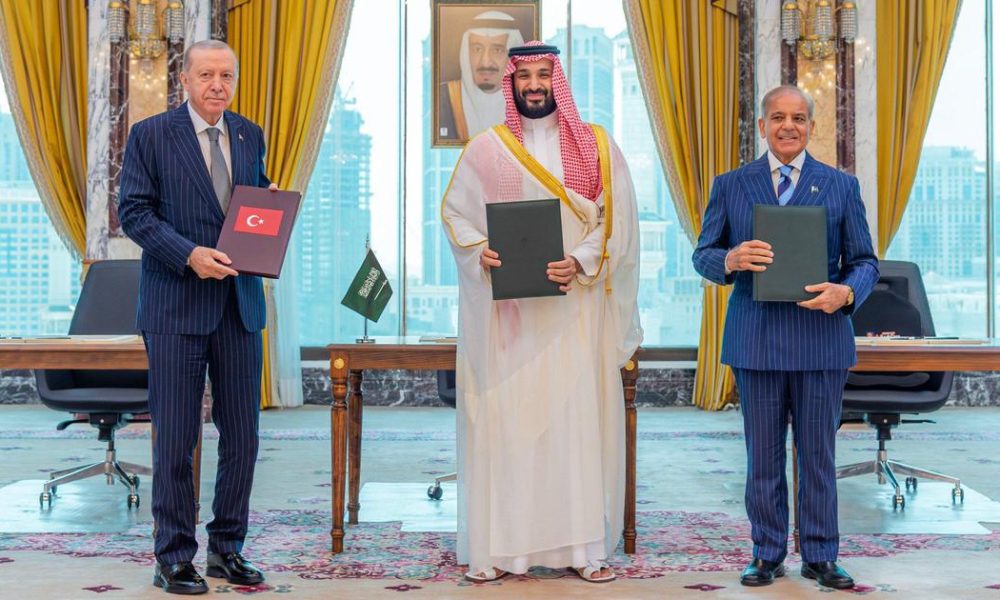
India is actively evaluating the potential consequences of a recent defense agreement forged between Pakistan, Saudi Arabia, and Türkiye, as announced by the Ministry of External Affairs (MEA) on Tuesday. The ministry’s spokesperson, Randhir Jaiswal, revealed that the government is analyzing this pact through the lens of national security and the broader implications for peace and stability in the region.
The Makkah Joint Defense Agreement, signed last Friday, is a significant development in West Asian geopolitics. It aims to establish a framework for collective deterrence, asserting that any military aggression against one of the three nations will be perceived as a direct threat to all. This agreement comes at a time of escalating tensions in the region, particularly involving Iran, Israel, and the United States, raising concerns about the potential for increased conflict.
This trilateral pact unites three Sunni Muslim-majority states, each holding substantial influence within the region. Saudi Arabia, known for being one of the largest oil exporters globally, houses Islam’s holiest sites, while Pakistan stands as the only nuclear-armed Muslim-majority nation. Türkiye, on the other hand, contributes a significant military presence as the second-largest member of NATO. The collaboration among these nations signifies a noteworthy shift in the power dynamics of West Asia.
During the media briefing, Jaiswal underscored India’s unwavering commitment to protecting its national interests, stating, “India remains fully committed to safeguarding its national interests and will take all necessary measures in this regard.” This statement reflects India’s proactive approach to evolving security scenarios in its neighborhood and worldwide.
Furthermore, Jaiswal indicated that India is closely monitoring the ongoing developments related to the West Asia conflict, emphasizing the need for vigilance in light of changing geopolitical landscapes. As this situation unfolds, it will be crucial for India to navigate its foreign relations carefully, balancing its ties with various nations while ensuring its own security and regional stability.
Source: scroll.in






No Comment! Be the first one.