

VD Savarkar’s Views on Cow Worship Revealed in Court Testimony
In a significant revelation during a recent court hearing, Satyaki Savarkar, the grandnephew of Hindutva ideologue Vinayak Damodar Savarkar, stated that his granduncle viewed cows as merely...

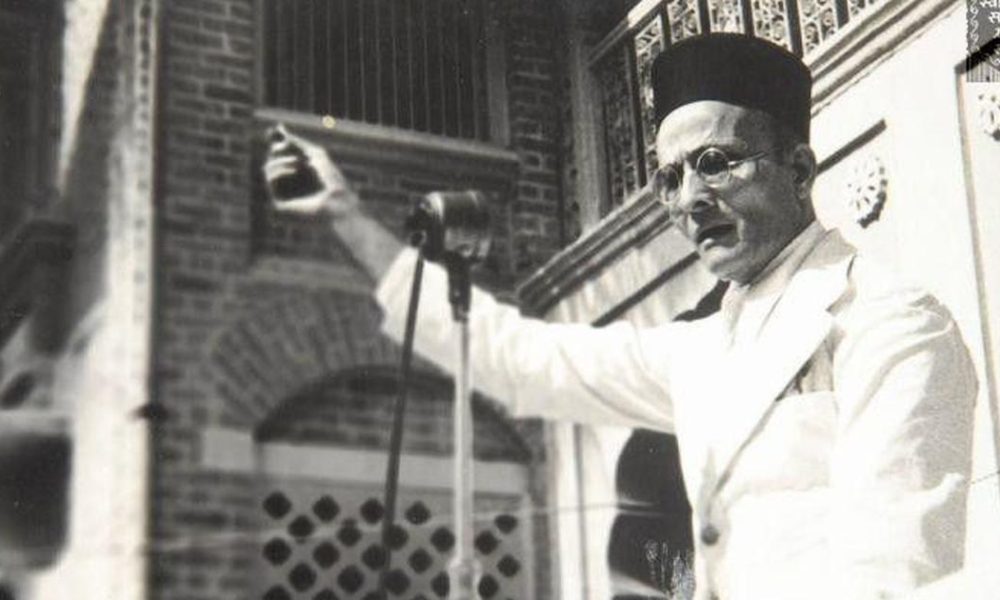
In a significant revelation during a recent court hearing, Satyaki Savarkar, the grandnephew of Hindutva ideologue Vinayak Damodar Savarkar, stated that his granduncle viewed cows as merely ‘useful’ animals and criticized the practice of cow worship. This acknowledgment came while testifying in a special MP/MLA court in Pune, as part of a criminal defamation case involving Congress leader Rahul Gandhi.
According to Satyaki Savarkar, the veneration of cows as deities was, in the eyes of VD Savarkar, a profound disrespect to both human beings and the very essence of divinity. He emphasized that Savarkar believed regarding an animal as a god undermined humanity’s rationality and dignity. During the proceedings, Gandhi’s legal team produced the book ‘Vigyan-Nishtha Nibandha’, which translates to ‘Essays based on Scientific Reasoning’, a work authored by Savarkar himself. Satyaki confirmed his granduncle’s authorship, shedding light on his controversial stance on the matter.
In his writings, VD Savarkar drew parallels between cows and other domesticated animals like dogs, horses, and donkeys, arguing that all should be protected rather than worshipped. He famously remarked, “The animal becomes a god, while a godlike human being is treated as an animal,” illustrating his belief that religious practices often lead to a distortion of logic and moral understanding. This perspective raises questions about the intersection of faith, culture, and reason in Indian society, particularly in relation to longstanding traditions surrounding cows.
The cross-examination brought to light several passages from Savarkar’s works that challenge conventional views on cow worship, a topic that remains contentious in contemporary India. His assertions highlight the complexities of Indian identity and the multifaceted nature of nationalism as espoused by the Hindutva movement. The court case itself is a focal point in the ongoing political discourse surrounding freedom of speech and the responsibilities of public figures.
As the defamation trial progresses, the implications of these revelations regarding Savarkar’s beliefs may reverberate beyond the courtroom, influencing public perception and political narratives. The dialogue initiated by this testimony not only reflects on Savarkar’s legacy but also prompts a re-examination of cultural practices that are often taken for granted in the fabric of Indian life.
Source: scroll.in






No Comment! Be the first one.