

‘Dug Dug’: A Stunning Satire on Faith and Folly in Modern India
In a striking exploration of faith and the absurdities that accompany it, Ritwik Pareek’s ‘Dug Dug’ makes its long-awaited debut in cinemas, five years after its premiere at the Toronto...

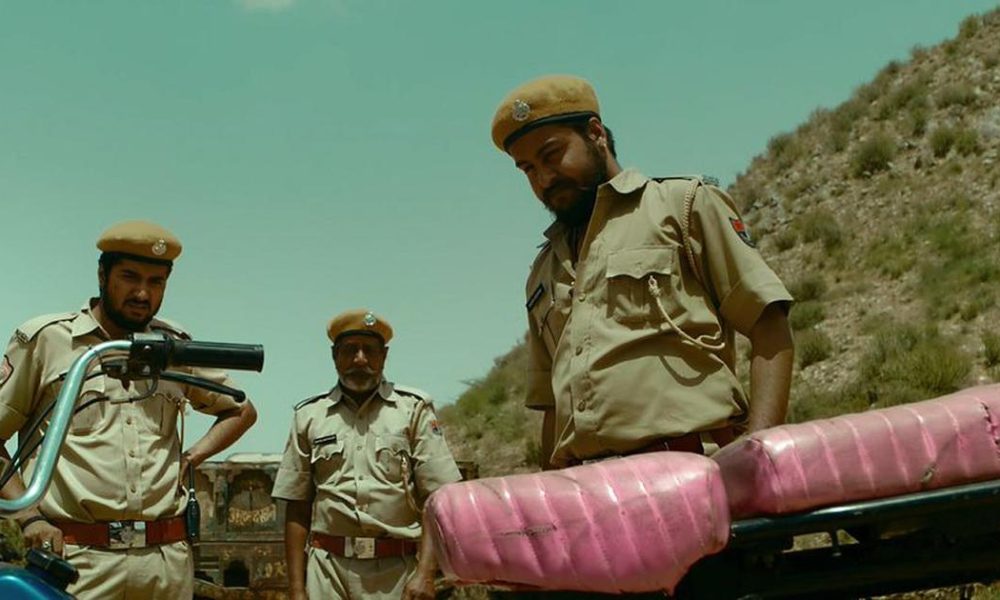
In a striking exploration of faith and the absurdities that accompany it, Ritwik Pareek’s ‘Dug Dug’ makes its long-awaited debut in cinemas, five years after its premiere at the Toronto International Film Festival. This film, largely presented in the Marwari language, embarks on a captivating journey that blends humor with a sharp critique of society’s blind faith.
The story revolves around Thakur, portrayed by Altaf Khan, who finds himself inebriated and riding his Luna bike one fateful night. His escapades take a bizarre turn when, after a police impound, the bike mysteriously returns to the scene of an accident. The local police, represented by characters Manphool (Durga Lal Saini), Pyare Lal (Gaurav Soni), and Badri (Yogendra Singh Parmar), are left astounded as they witness what they perceive to be miraculous events surrounding the bike’s unexplainable movements.
As these occurrences unfold, the community gradually becomes convinced of the bike’s divine powers, transforming Thakur from a neighborhood drunkard to a revered messenger of newfound spirituality. The film cleverly illustrates how the ordinary can morph into the extraordinary through the lens of collective belief, with Thakur’s favorite colors—pink and blue—becoming symbolic of the new religious fervor ignited by the bike.
What makes ‘Dug Dug’ particularly noteworthy is its approach towards the themes of faith and consumerism in religion. The film’s satirical tone encourages viewers to reflect on the nature of belief in a society that often seeks meaning in the most unlikely of places. Rather than adopting a cynical stance, Pareek opts for a narrative that resonates with resignation, showcasing how people willingly follow false idols with human origins.
Visually, ‘Dug Dug’ is a treat, combining striking aesthetics with a unique narrative style that captures the eccentricities of its characters and the absurdity of their circumstances. The film is a vivid allegory of contemporary India’s penchant for creating deities from the mundane, leaving audiences both amused and contemplative about their own beliefs and the emerging ‘religion economy’ in modern society.
Source: scroll.in







No Comment! Be the first one.