

Is India Shifting Towards a Chinese Model of Governance with New Delimitation Plans?
The recent announcement by the Bharatiya Janata Party (BJP)-led government to convene a special session of Parliament has sparked a significant discussion surrounding the proposed increase in the...

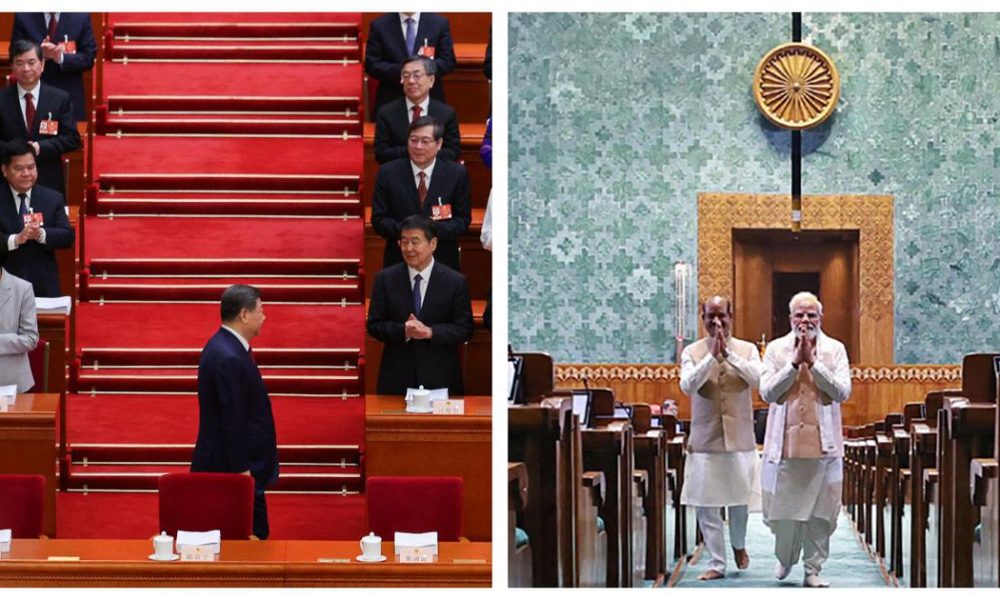
The recent announcement by the Bharatiya Janata Party (BJP)-led government to convene a special session of Parliament has sparked a significant discussion surrounding the proposed increase in the size of the Lok Sabha. This move, framed as a constitutional imperative to enhance representation for a growing electorate, raises concerns that extend beyond mere logistical adjustments. Critics argue that this could be a strategic step toward reshaping Indian democracy, reflecting the political management style seen in the People’s Republic of China.
As the nation prepares for a potential redrawing of electoral boundaries, the prospect of expanding the Lok Sabha to over 800 seats looms large. This initiative bears a striking resemblance to the structure of China’s National People’s Congress, where nearly 3,000 delegates convene annually, ostensibly to perform a legislative function that often merely endorses decisions made by the ruling party’s leadership. This comparison invites scrutiny regarding the genuine nature of democratic representation within India’s evolving political landscape.
One of the most pressing concerns with a significantly larger Parliament is the inherent complexity and potential ineffectiveness of such an unwieldy legislative body. With hundreds of members representing vast constituencies, the ability to engage in meaningful debate and scrutiny could be severely compromised. Critics fear that rather than fostering robust discussions on policy, a bloated Parliament might devolve into a platform for merely rubber-stamping governmental decisions.
The implications of this proposed delimitation go beyond mere arithmetic; they touch upon the core principles of representative democracy. Observers note that this shift may signify a departure from the more deliberative frameworks seen in Western democratic systems, particularly the rigorous accountability mechanisms present in the United States. As India navigates these changes, questions about the future of its democratic processes and the role of dissent within governance become increasingly pertinent.
In a time when the global political climate is fraught with challenges to democratic norms, the direction India takes in this context will be crucial. As citizens and political analysts alike watch closely, the decision regarding the delimitation could either fortify or undermine the democratic ethos that has defined the nation since its independence. The ongoing debate serves as a reminder of the delicate balance between governance, representation, and the preservation of democratic ideals.
Source: scroll.in







No Comment! Be the first one.