

Art Reflects Caste Struggles at Kochi Biennale: A Tribute to Ambedkar’s Legacy
The Kochi-Muziris Biennale, which wrapped up on March 31, presented a profound exploration of art influenced by the legacy of Dr. B.R. Ambedkar, the architect of the Indian Constitution and a...

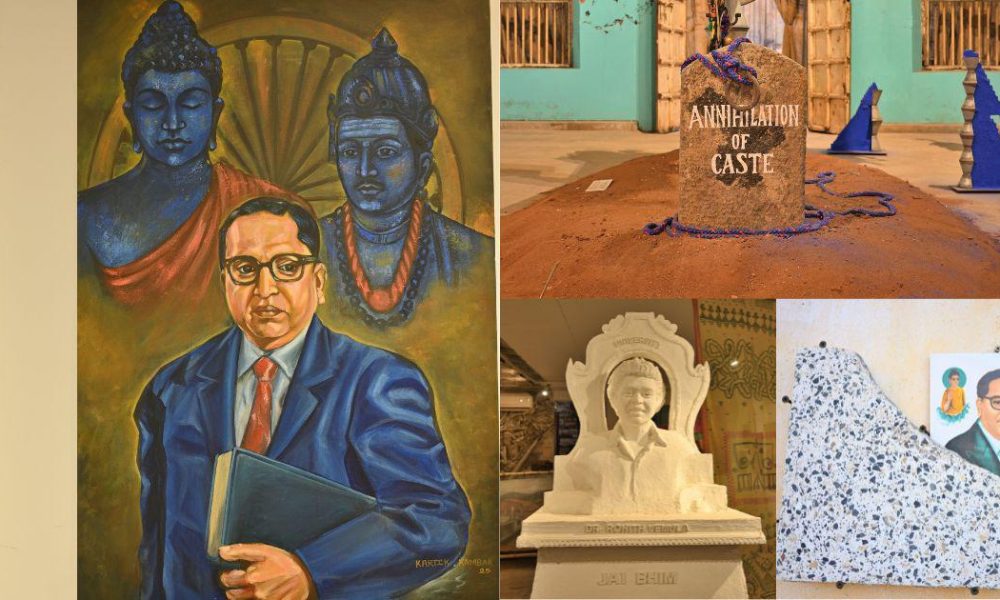
The Kochi-Muziris Biennale, which wrapped up on March 31, presented a profound exploration of art influenced by the legacy of Dr. B.R. Ambedkar, the architect of the Indian Constitution and a prominent figure in the fight against caste discrimination. Among the standout pieces was a gripping sculpture by artist Kailash Khanjode, showcasing two busts positioned back-to-back on a meticulously hand-sculpted pedestal.
One of the busts is inscribed with the name “Dr. Rohith Vemula,” a poignant reminder of the young doctoral student whose tragic suicide in January 2016 at Hyderabad Central University highlighted ongoing struggles against caste-based discrimination in educational institutions. Vemula’s story resonates deeply within the Dalit community and beyond, serving as a stark illustration of the failures that persist in addressing caste injustices.
On the opposing side of the pedestal stands the bust of Pochiram Kamble, who met a horrific fate 38 years prior. In August 1978, Kamble was brutally murdered by rioters amid violent protests triggered by the Maharashtra legislature’s decision to rename Marathwada University in honor of Ambedkar. This historical context adds layers of meaning to Khanjode’s work, symbolizing the perpetuation of caste violence through generations.
The inscription above Kamble’s bust proudly declares “Dr. Babasaheb Ambedkar University,” while below it, the phrase “Jai Bhim” serves as a rallying cry for Dalit empowerment and solidarity. A Marathi report mentions that Kamble died with the words “Jai Bhim” on his lips, making the sculpture not only a tribute to him but also a profound commentary on the cyclical nature of caste-based violence.
As viewers move from Kamble’s bust to Vemula’s, the artwork narrates a continuous thread of caste discrimination that spans decades, prompting a reflection on the societal changes—or lack thereof—over time. This sculpture is part of a broader art initiative titled “Ginning Justice,” created by artists Rohit Athavale and Sachin Banne, which aims to depict Mumbai’s historically segregated neighborhoods based on caste and religion, as well as the intertwined history of labor in the textile mills established by Kolhapur.
The Kochi Biennale serves as a vital platform for artists to confront uncomfortable truths about societal issues, and this particular exhibition underscores the enduring relevance of Ambedkar’s ideals in contemporary India. It invites audiences to engage in critical dialogues about caste, identity, and justice, making it a significant cultural event that resonates with the ongoing struggles for equality in Indian society.
Source: scroll.in






No Comment! Be the first one.