

Modi Advocates for Uniform Civil Code in West Bengal, Mamata Warns of Its Implications
In a bold move to reshape the political landscape of West Bengal, Prime Minister Narendra Modi announced on Saturday that the Bharatiya Janata Party (BJP) aims to introduce a Uniform Civil Code (UCC)...

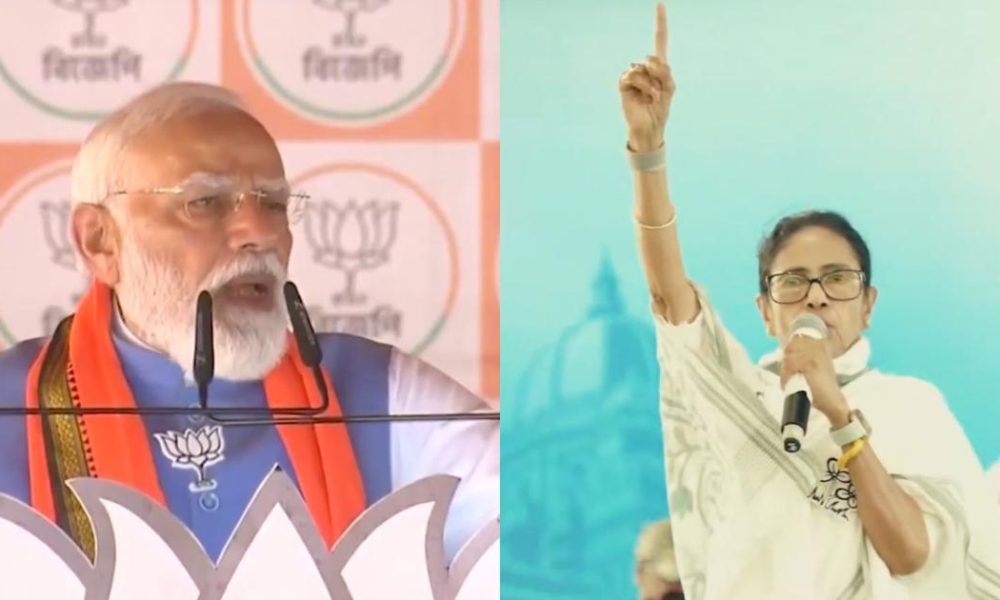
In a bold move to reshape the political landscape of West Bengal, Prime Minister Narendra Modi announced on Saturday that the Bharatiya Janata Party (BJP) aims to introduce a Uniform Civil Code (UCC) in the state. This statement comes in the wake of Union Home Minister Amit Shah’s declaration that a UCC could be enacted within six months if the BJP secures electoral victory. Modi believes that implementing this code will put an end to what he terms the ‘politics of appeasement’ that has characterized the region.
The Uniform Civil Code seeks to standardize laws governing personal matters such as marriage, divorce, inheritance, and adoption, applying the same regulations to all citizens, irrespective of their religion. Currently, these personal affairs are guided by community-specific laws, which are often rooted in religious traditions. The BJP sees the UCC as a crucial step towards fostering national unity and equality.
However, this initiative has drawn sharp criticism from West Bengal’s Chief Minister Mamata Banerjee, who labeled the proposal as ‘dangerous.’ Banerjee argues that the UCC would infringe on the rights of individuals to practice their faith freely, warning that it could lead to societal unrest and division rather than harmony. The Chief Minister’s remarks reflect the apprehensions held by many in the state, who fear that the UCC might undermine the cultural and religious diversity that characterizes West Bengal.
Historically, the call for a Uniform Civil Code has been a significant component of the BJP’s political agenda. Various BJP-ruled states have made strides towards implementing such a code, with Uttarakhand being the first state to do so since India gained independence. Additionally, Gujarat’s legislative assembly recently passed similar legislation, despite facing opposition protests. Furthermore, Goa has long operated under a common civil code established during the Portuguese colonial era, highlighting the feasibility of such an initiative.
The debate surrounding the UCC is not merely a political maneuver; it touches upon fundamental issues of identity, rights, and governance in a diverse nation like India. As the BJP gears up for future elections, it is likely that the discourse surrounding the UCC will intensify, with both proponents and opponents voicing their perspectives. The outcome of this debate could significantly impact the political dynamics in West Bengal and beyond.
Source: scroll.in





No Comment! Be the first one.