

Revised Textbooks in India Spark Debate on Historical Narratives and Inquiry
The National Council of Educational Research and Training (NCERT) has introduced a new social science textbook for Class 9, which has stirred controversy for its revisionist approach to Indian...

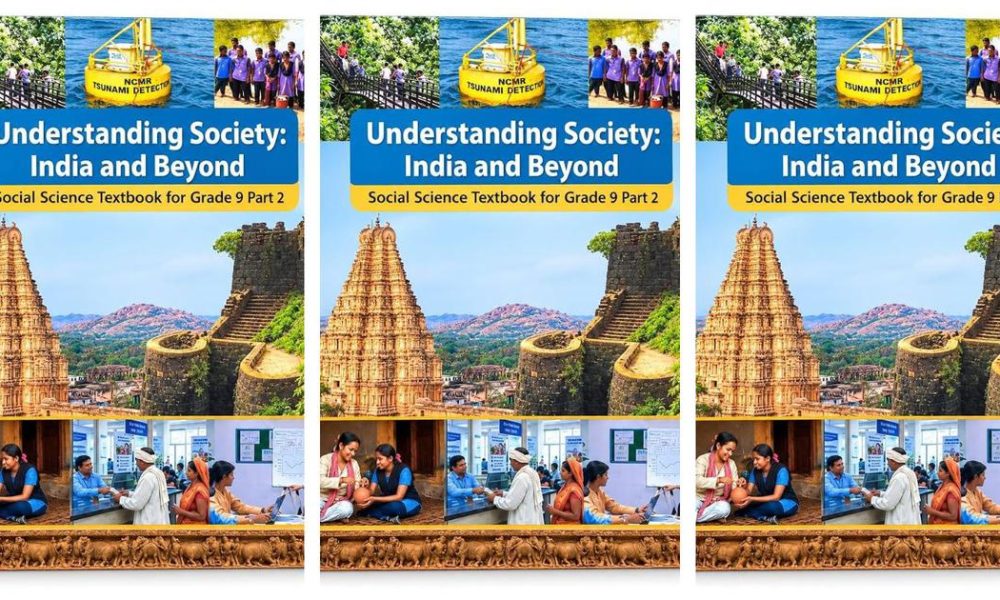
The National Council of Educational Research and Training (NCERT) has introduced a new social science textbook for Class 9, which has stirred controversy for its revisionist approach to Indian history. The book, entitled Understanding Society: India and Beyond (Part 2), omits key chapters on European revolutions, favoring a focus on medieval Indian history framed through the lens of ‘Resistance and Resilience’ against various foreign invasions.
This educational shift emphasizes the narrative of the Indian subcontinent facing multiple waves of invasions motivated by territorial ambitions and religious zeal. The textbook highlights the harshness of the Mughal regime, particularly against figures such as Sikh gurus, and delves into regional revolts like the Jat Uprising of 1669, which arose in response to oppressive taxation and religious policies.
While it is essential to study these historical conflicts and the oppression faced by different communities, the portrayal of medieval history as a straightforward narrative of Muslim conquest versus Hindu resistance oversimplifies the complexities of the past. Critics argue that this monolithic perspective replaces rich historical analysis with a political storyline steeped in a continuous civilizational grievance.
By framing history predominantly as an ongoing struggle between religious factions, such textbooks risk overlooking the significant cultural exchanges and synthesis that marked the medieval era. Beyond the political turmoil, the period also witnessed the emergence of philosophies like Sufism and Bhakti, which fostered shared spiritual experiences among diverse communities. These elements reflect the intricate tapestry of Indian history, which is often lost in reductive narratives.
The implications of such educational reforms extend beyond mere academic discourse; they touch upon the very essence of how history informs national identity and social cohesion. By prioritizing certain historical events while sidelining others, there is a danger of fostering division rather than encouraging inquiry and understanding. A nuanced approach to education is crucial in nurturing a generation that appreciates the multi-faceted nature of its heritage, rather than one that views history through a polarized lens.
Source: scroll.in







No Comment! Be the first one.