

Supreme Court to Decide on Revisiting Split Verdict on Election Commission Appointments Act
The Supreme Court of India is set to deliberate on a request for the recall of a split verdict issued in September regarding the constitutionality of a contentious law that governs the appointments...

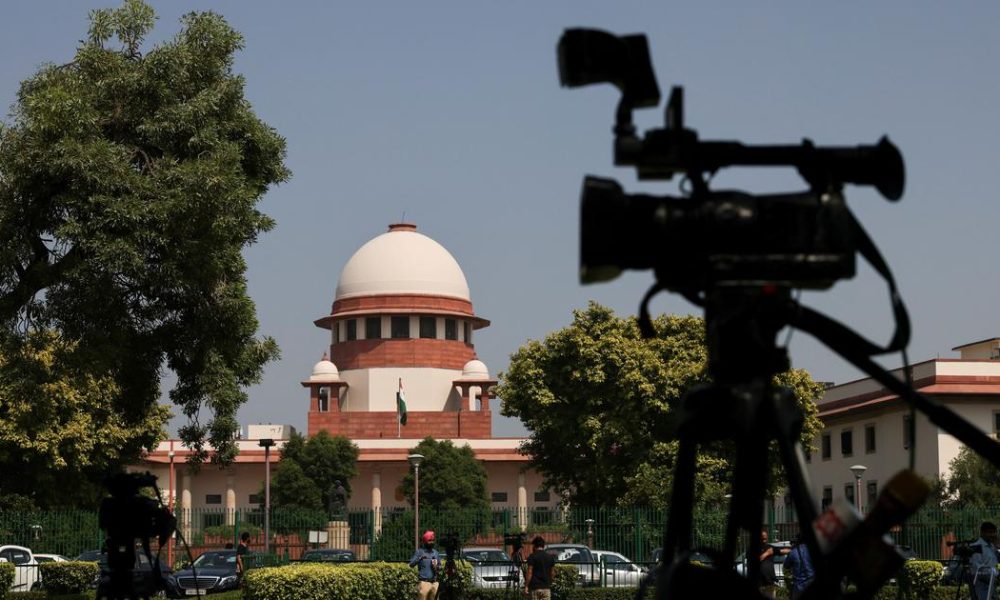
The Supreme Court of India is set to deliberate on a request for the recall of a split verdict issued in September regarding the constitutionality of a contentious law that governs the appointments to the Election Commission. Chief Justice Surya Kant indicated during proceedings on Wednesday that he would make a decision on this matter shortly. This development arises from concerns raised by advocate Gopal Sankaranarayanan regarding potential conflicts of interest that were not disclosed during the earlier hearings.
The case in question involves the 2023 Chief Election Commissioner and Other Election Commissioners Appointment, Conditions of Service and Term of Office Act, which has sparked significant debate over its implications for electoral integrity in India. The previous verdict, pronounced on September 23, referred the petitions challenging the law to a larger bench, suggesting that it may not uphold the principles of an independent selection process for Election Commission appointments.
Previously, Justice Satish Chandra Sharma, along with Justice Dipankar Datta, expressed concerns about the law’s structure. The Act stipulates that a selection committee, comprising the Prime Minister, a Union Cabinet minister, and the leader of the Opposition in the Lok Sabha, is responsible for appointing the Chief Election Commissioner and other Election Commissioners. Critics argue that this configuration gives the ruling government an unfair advantage, holding a 2:1 majority over the Opposition leader in the decision-making process.
During the recent hearing, Sankaranarayanan pointed out that Justice Sharma had failed to disclose that his son serves as a standing counsel for the Election Commission in Madhya Pradesh. This revelation raises questions about judicial impartiality and the transparency of the courtroom proceedings. The advocate’s plea for a recall of the verdict hinges on this perceived conflict of interest, which he believes could undermine public confidence in the judicial process.
As the Supreme Court prepares to address this pivotal issue, it highlights the ongoing tension between maintaining electoral independence and the influence of political power. The outcome of this decision could have far-reaching consequences for the future of the Election Commission and its role in upholding the democratic process in India. Stakeholders from various sectors are closely monitoring developments, as the integrity of electoral institutions is crucial to the health of India’s democracy.
Source: scroll.in







No Comment! Be the first one.