

Rising Maize Prices Threaten Poultry Sector Amid Ethanol Demand and Poor Monsoon
In a troubling development for India’s poultry industry, the price of maize, a crucial feed component, is on the rise due to increasing demand for ethanol blending, compounded by this year’s...

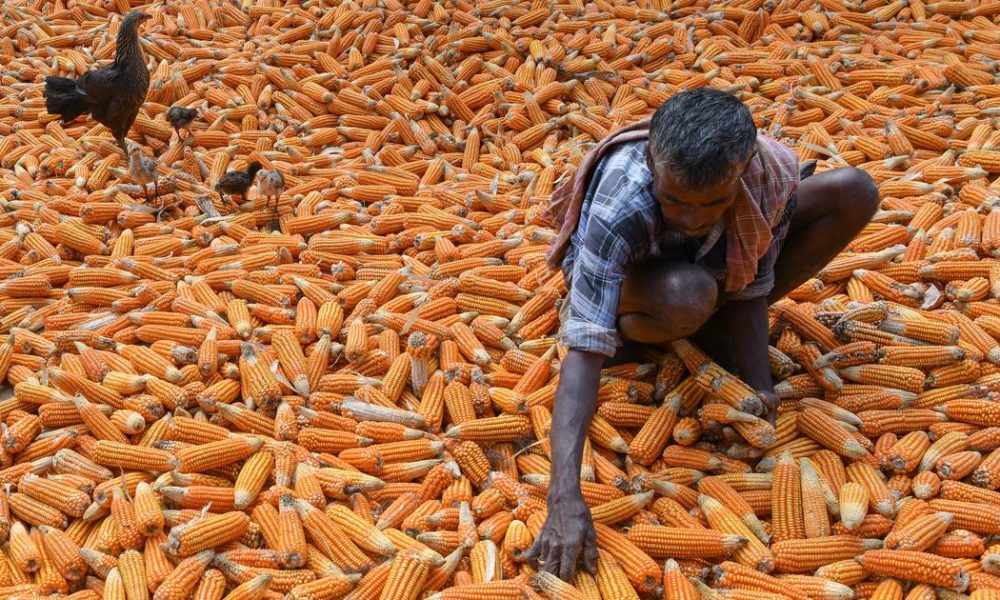
In a troubling development for India’s poultry industry, the price of maize, a crucial feed component, is on the rise due to increasing demand for ethanol blending, compounded by this year’s insufficient rainfall. Even though maize production hit record levels last year, the situation is becoming dire for poultry farmers who are now grappling with escalating costs and diminishing availability of this essential staple.
Historically, maize was priced between Rs 12 and Rs 14 per kilogram in 2019, but current market rates have surged to Rs 27 to Rs 28 per kilogram. This significant increase poses a substantial challenge for both egg-layer and broiler poultry farmers who rely heavily on maize as their primary feed source. With soymeal serving as a secondary option, the soaring costs are forcing farmers to either absorb the losses or transfer the financial burden onto consumers through higher prices for eggs and chicken.
The shift towards ethanol blending has seen maize’s contribution rise dramatically, from 0% in the 2021-2022 fiscal year to around 37% projected for 2025-2026. The government’s initiative to incorporate 20% ethanol in petrol has sparked considerable discussion, especially amidst allegations from vehicle owners of damage caused by the biofuel. Additionally, rising sugar prices have intensified scrutiny over the Ethanol Blended Petrol program, prompting debates on its broader implications on food supply and pricing.
Poultry farmers, particularly those in Maharashtra, have expressed their concerns regarding these escalating feed costs amid the threat of a weak monsoon, which could lead to lowered maize yields. With the agricultural sector already facing various pressures, the combination of climate challenges and policy shifts creates a precarious situation for poultry producers. As the struggle continues, stakeholders are urging the government to reassess the ethanol blending policy to alleviate the financial strain on farmers and ensure food security.
As India navigates these complex issues, the impact of maize price fluctuations will likely resonate throughout the food industry, potentially leading to increased prices for consumers and greater instability within the agricultural sector. The future of poultry farming in India hinges on finding a balance between renewable energy initiatives and the fundamental needs of food production.
Source: scroll.in







No Comment! Be the first one.