

Rahul Gandhi Protests for Pellet-Injured Student as CJP Team Faces Assault in Jaipur
In a striking display of political activism, Congress leader Rahul Gandhi organized a sit-in protest outside the office of the Deputy Commissioner of Police in Delhi, advocating for justice for a...

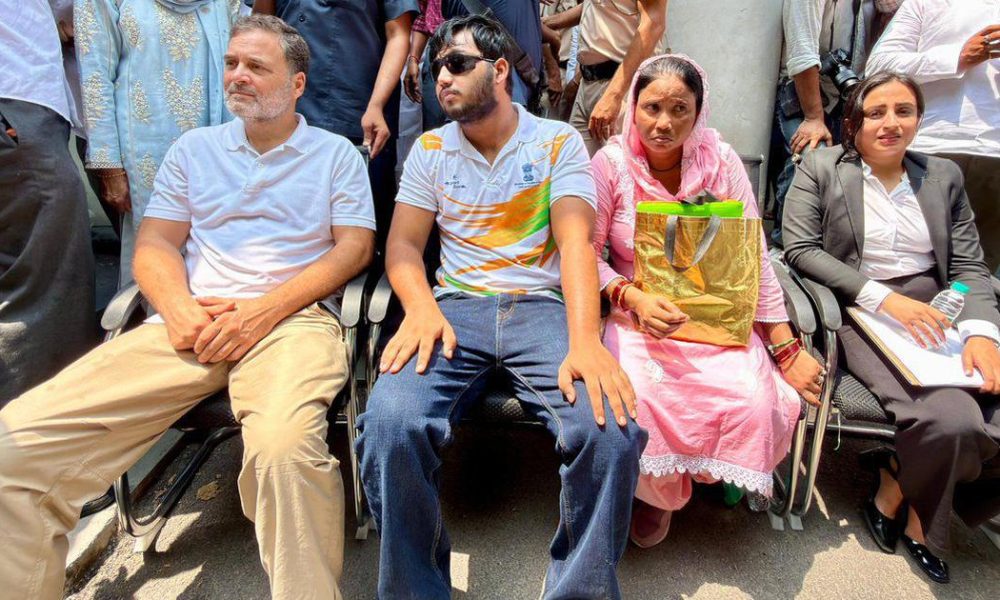
In a striking display of political activism, Congress leader Rahul Gandhi organized a sit-in protest outside the office of the Deputy Commissioner of Police in Delhi, advocating for justice for a student injured by pellet gun fire during a youth protest in July. The student, Sahil Lochav, had lodged a complaint regarding the incident, which occurred on July 20, when demonstrators were marching towards Parliament. Despite submitting a written complaint on August 14, Lochav has reportedly faced hurdles in getting the police to register a First Information Report (FIR).
According to Congress, the police did not respond to Lochav’s appeals, including a follow-up attempt made on August 17, where his emails and calls allegedly went unanswered. Gandhi has been vocal about the police’s use of pellet guns against peaceful protesters, asserting that such actions are indicative of a broader issue regarding the handling of dissent in the capital.
In a separate incident, the Cockroach Janta Party (CJP) has accused the Bharatiya Janata Party (BJP) of orchestrating an attack on its team in Rampura Kanwarpura village, located near Jaipur. The CJP team was conducting an inspection of a government school as part of a larger campaign aimed at enhancing the conditions of public educational institutions across the nation. During their visit, the team was reportedly confronted by a group of men armed with sticks, resulting in a violent altercation that left team members injured.
Video footage circulating on social media captured the chaos, showing assailants striking the CJP members and damaging their vehicle. Abhijeet Dipke, the campaign’s founder, claimed that despite notifying the local police about their visit, law enforcement failed to intervene effectively to prevent the violence, raising questions about the security measures in place for public officials engaged in civic duties.
These incidents underline a growing tension between political factions in India, as well as the challenges faced by activists and political groups advocating for civil rights and educational reforms. The contrasting narratives of violence and protest highlight the complex landscape of Indian politics, where peaceful demonstrations are met with resistance, and political campaigns can turn hostile under the weight of rising partisanship.
Source: scroll.in



No Comment! Be the first one.