

The Truth Behind Speed-Reading: Can We Really Read 1,000 Words per Minute?
In an age where time is of the essence, speed-reading has emerged as a popular trend, claiming to significantly enhance our reading capabilities. Advocates of this method suggest that with the right...

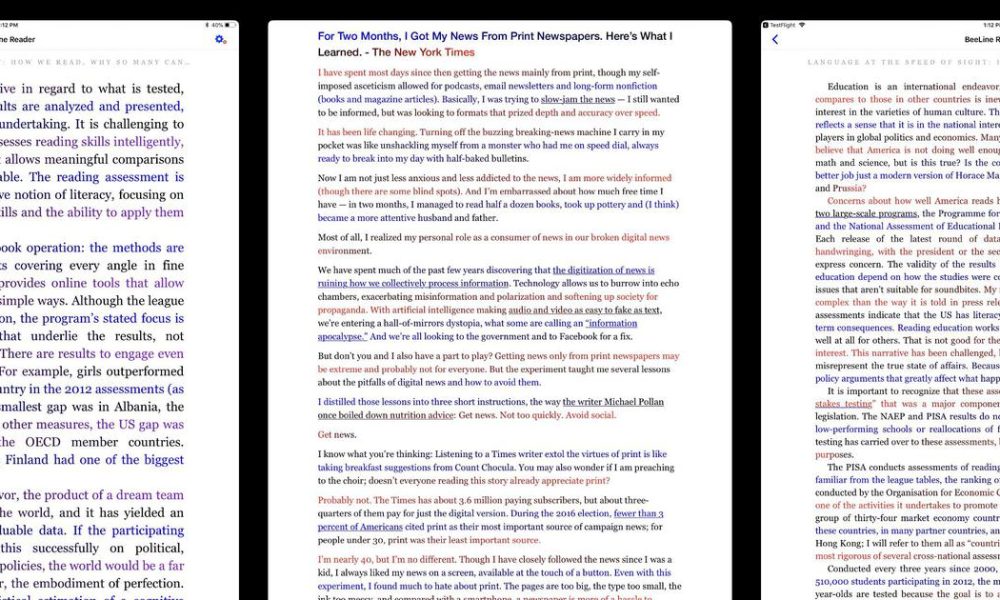
In an age where time is of the essence, speed-reading has emerged as a popular trend, claiming to significantly enhance our reading capabilities. Advocates of this method suggest that with the right techniques, as presented in numerous well-known books and online tutorials, individuals can boost their reading speed to astonishing rates of 1,000 words per minute or more. However, this raises an important question: Is such a dramatic increase in reading speed realistic?
To evaluate these bold assertions, it is crucial to refer to scientific research that explores our innate reading abilities. A comprehensive 2019 meta-analysis, which reviewed 190 different studies, provides valuable insights. It found that adults generally read English non-fiction texts at a speed ranging from 175 to 300 words per minute. Interestingly, readers tend to go faster with fiction, achieving speeds between 200 and 320 words per minute. This variance could be attributed to the more engaging nature of fiction, making it easier for readers to digest the material.
Proponents of speed-reading argue that traditional estimates of reading speed are overly conservative, attributing slower rates to what they describe as inefficient reading habits. However, this perspective contradicts established understanding about the mechanics of reading. Our eyes do not glide smoothly over the text; rather, they make quick movements known as saccades, punctuated by brief pauses called fixations. During these pauses, our brains process the language and extract meaning from the text. This vital information extraction only occurs during fixations, which last between 200 to 300 milliseconds, although the duration can vary.
Moreover, the reading process is not purely mechanical or linear. It involves complex cognitive functions that require time and focus, especially when striving for comprehension and retention. While speed-reading might appeal to those seeking efficiency, the scientific basis suggests that there are limits to how quickly we can read without sacrificing understanding. For Indian readers, who often juggle multiple responsibilities, it may be tempting to pursue speed-reading techniques, but it’s essential to balance speed with comprehension.
In conclusion, while speed-reading apps and techniques promise to revolutionize our reading habits, the reality remains that there is a significant gap between these claims and actual reading capabilities. As we seek to improve our reading skills, it may be more beneficial to focus on enhancing comprehension rather than merely chasing higher speeds. Ultimately, the goal should be to cultivate a deeper appreciation for reading, allowing us to engage meaningfully with texts rather than just racing through them.
Source: scroll.in







No Comment! Be the first one.