

Supreme Court Establishes Committee to Investigate Police Actions During Youth Protests
The Supreme Court of India announced on Tuesday its decision to form a committee tasked with examining claims of police misconduct during the youth protests that erupted last month, alongside...

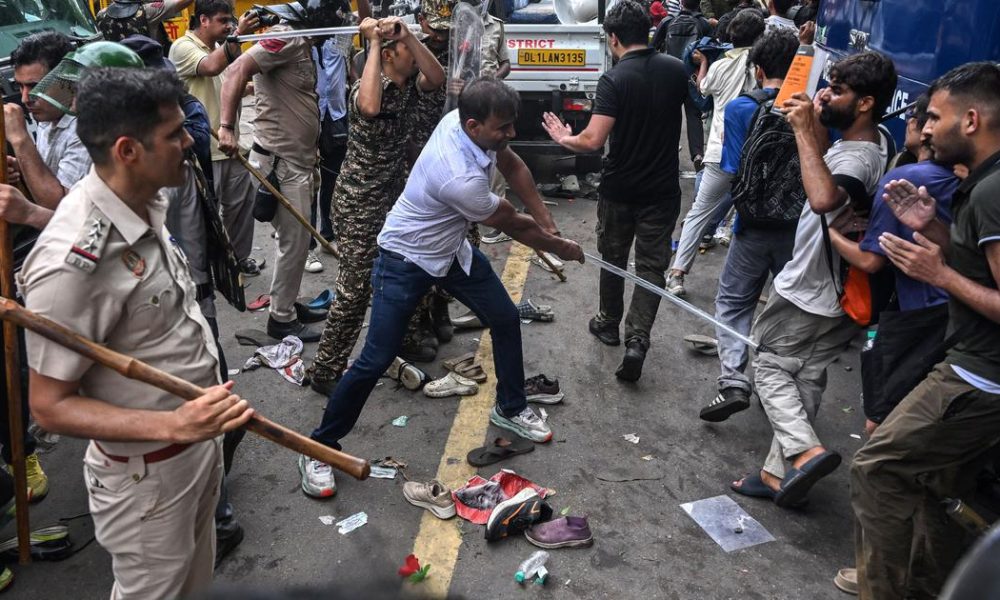
The Supreme Court of India announced on Tuesday its decision to form a committee tasked with examining claims of police misconduct during the youth protests that erupted last month, alongside incidents of violence directed at security personnel. This development signals the judiciary’s commitment to addressing the ongoing unrest and ensuring accountability for actions taken by law enforcement during these demonstrations.
The committee will be composed of distinguished members, including a former Supreme Court judge, a retired chief justice of a High Court, and a senior former police officer. A bench featuring Chief Justice Surya Kant, along with Justices Joymalya Bagchi and V Mohana, indicated that the formal order to establish the committee would be issued on Wednesday, pending suggestions for additional committee members from various stakeholders.
In an emphatic statement, Chief Justice Kant remarked on the necessity of taking the issue seriously, asserting that there can be no justification for any form of violence or misconduct. He emphasized that the committee must diligently investigate all relevant evidence, including videos and footage captured by security cameras during the violent events that took place during the march to Parliament on July 20. The involvement of former judicial and police officials in the committee aims to ensure an impartial and thorough investigation.
Moreover, the Supreme Court’s examination will extend to allegations concerning female protesters, who reported incidents of sexual harassment and online abuse amid the turmoil. The court’s acknowledgment of these serious concerns underscores a growing awareness of the challenges faced by women in social movements in India.
During the proceedings, the Supreme Court also raised the possibility of exercising its extraordinary jurisdiction to dismiss first information reports (FIRs) filed against students participating in the protests. However, it clarified that cases involving individuals with a history of criminal behavior would be treated separately. This nuanced approach reflects the court’s intent to balance the protection of civil liberties while addressing public order issues.
The Supreme Court’s actions have the potential to set a significant precedent for how protests are managed and policed in India, particularly in an era where youth activism is on the rise. As the committee begins its work, many will be watching closely to see how it shapes the discourse around police accountability and the protection of fundamental rights in the country.
Source: scroll.in




No Comment! Be the first one.