

Allahabad High Court Grants Anticipatory Bail to Muslim Student Accused of Religious Conversion Attempt
The Allahabad High Court has recently provided anticipatory bail to a Class 12 Muslim student who was accused of attempting to forcibly convert the religion of her Hindu classmate. The decision, made...

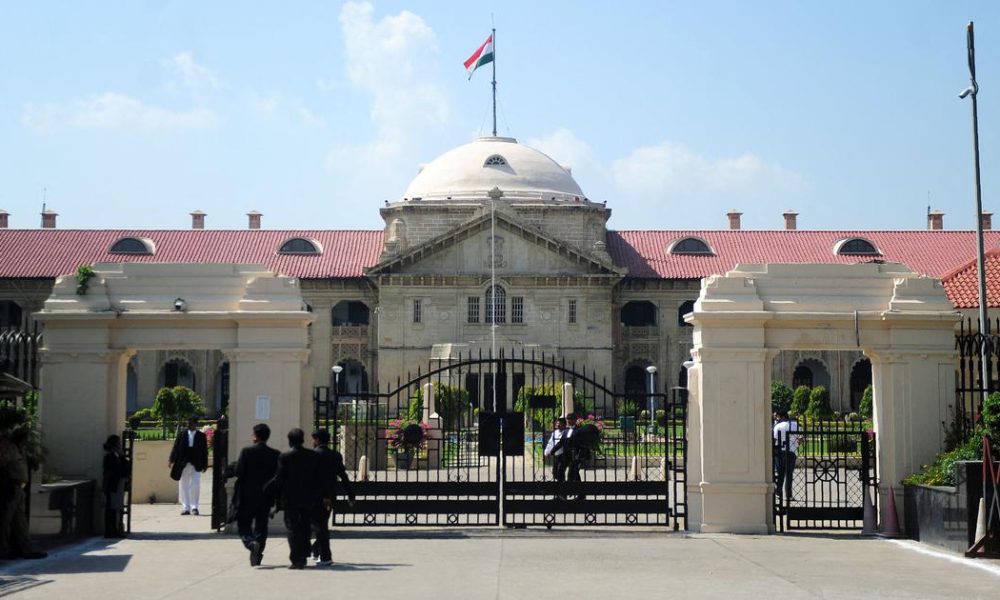
The Allahabad High Court has recently provided anticipatory bail to a Class 12 Muslim student who was accused of attempting to forcibly convert the religion of her Hindu classmate. The decision, made by Justice Avnish Saxena, was reported on Wednesday and highlights the complexities surrounding allegations of religious coercion in educational settings.
The case revolves around allegations made by the Hindu student’s brother, who claimed that his sister was compelled to wear a burqa and was being pressured to convert to Islam by a group of Muslim classmates, including the accused, identified as Malishka, also known as Malishka Fatma. Justice Saxena remarked that the only evidence presented against Fatma was the statement of the alleged victim, emphasizing the lack of concrete proof to support the accusations.
Fatma’s legal team argued that their client had no prior criminal record, which influenced the court’s decision to grant bail. The allegations stem from an incident reported to have occurred in December, where the Hindu student claimed that she was not only forced to wear a burqa during an outing but was also coerced into consuming non-vegetarian food, which conflicts with her religious beliefs. The situation raised questions about the dynamics of inter-religious relationships among students and the potential for misunderstandings.
Following the initial complaint, three other Muslim students involved in the situation also sought legal recourse by challenging the first information report (FIR) filed against them. They contend that the accusations made by the Hindu student’s brother were unfounded and potentially driven by misunderstanding or miscommunication.
This case has ignited discussions on religious freedom and the delicate balance between cultural practices within India’s diverse society. As more details emerge, the implications of this incident may resonate beyond the courtroom, influencing perceptions of religious tolerance and coexistence among India’s youth.
Source: scroll.in





No Comment! Be the first one.