

From Classrooms to Clinics: How AI Is Reshaping Daily Life in India
From Classrooms to Clinics: How AI Is Reshaping Daily Life in India Not long ago, Artificial Intelligence (AI) was something most people associated with science fiction movies, advanced robotics, or...

From Classrooms to Clinics: How AI Is Reshaping Daily Life in India
Not long ago, Artificial Intelligence (AI) was something most people associated with science fiction movies, advanced robotics, or large technology companies. It was often described as the technology of the future—a powerful innovation that would one day transform the way we live and work.
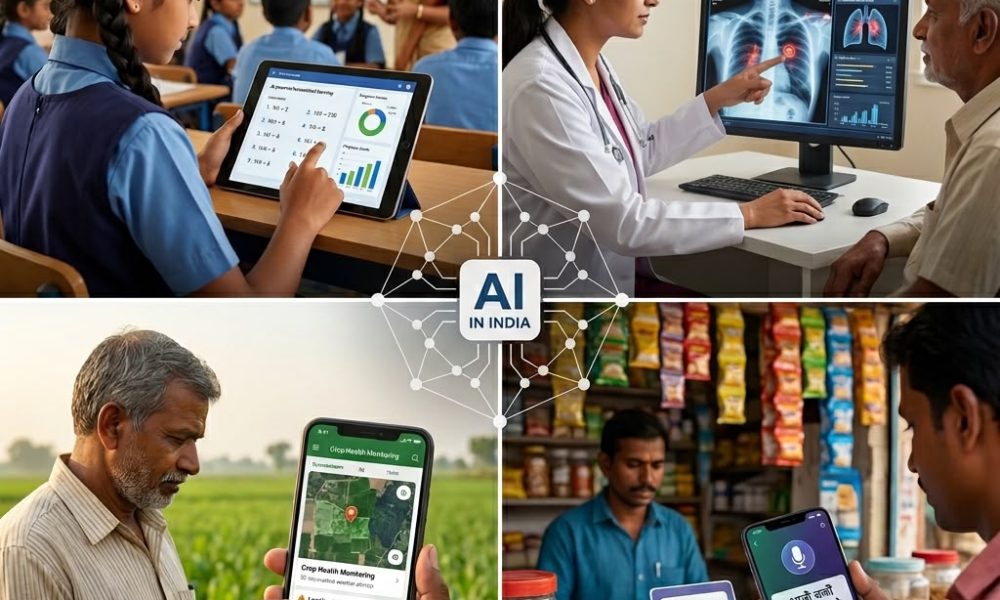
Today, that future is no longer distant. Across India, AI has quietly woven itself into everyday life. Whether it’s a student using an online learning platform, a doctor reviewing medical scans, a farmer checking crop health through a smartphone app, or a customer making a digital payment, AI is increasingly working behind the scenes to make life easier, faster, and more efficient.
What makes this transformation remarkable is that millions of Indians interact with AI every day, often without even realizing it.
Learning Beyond the Traditional Classroom
Education is one of the sectors where AI is making a visible difference. In a country as vast and diverse as India, classrooms often contain students with varying abilities, learning speeds, and educational needs. Traditional teaching methods can make it difficult to provide personalized attention to every learner.
AI-powered educational platforms are helping bridge this gap. These intelligent systems can analyze how students perform, identify areas where they struggle, and recommend customized lessons and practice exercises.
For instance, a student facing difficulties in mathematics may receive additional support and targeted exercises, while another who excels can move ahead to more advanced topics. This personalized approach allows students to learn at their own pace and build confidence in subjects they once found challenging.
The impact is especially significant in rural and underserved regions, where access to quality educational resources and experienced teachers may be limited. Through AI-driven learning apps, students can access lessons, assessments, and educational support regardless of their location.
Teachers are also benefiting. Administrative tasks such as grading assignments, tracking student performance, and generating reports can now be automated, giving educators more time to focus on what matters most—teaching and mentoring students.
A New Era in Healthcare
Perhaps one of the most meaningful applications of AI is in healthcare. Across India, hospitals, clinics, and healthcare providers are increasingly adopting AI-powered tools to improve patient care and medical decision-making.
Medical imaging technologies enhanced by AI can analyze X-rays, CT scans, and MRI images within seconds. These systems help doctors identify abnormalities, detect diseases earlier, and make more informed treatment decisions.
Early diagnosis is often the key to successful treatment, particularly for serious illnesses such as cancer, heart disease, and neurological disorders. By assisting healthcare professionals with faster and more accurate analysis, AI is helping improve patient outcomes.
Telemedicine has also experienced significant growth. AI-powered chatbots and virtual assistants can provide preliminary medical guidance, assess symptoms, and direct patients to appropriate healthcare services. For people living in remote villages and underserved areas, such technologies can provide valuable access to healthcare information when doctors are not immediately available.
Healthcare experts emphasize that AI is not replacing doctors. Instead, it serves as a powerful assistant, helping medical professionals make better decisions while allowing them to focus more on patient care.
Making Banking Safer and Smarter
India’s rapid adoption of digital payments has transformed the financial landscape. Millions of transactions take place every day through mobile banking applications, UPI platforms, and digital wallets.
Behind these transactions, AI plays a critical role in maintaining security and trust.
Financial institutions use AI systems to detect suspicious activities, identify unusual transaction patterns, and prevent fraud before it occurs. These systems continuously analyze enormous volumes of data, helping banks respond to potential threats in real time.
Consumers also benefit from personalized financial services. AI-powered applications can analyze spending habits, suggest budgeting strategies, and recommend financial products that align with individual needs and goals.
As India’s digital economy continues to expand, AI will become increasingly important in ensuring secure, seamless, and efficient financial services.
Empowering India’s Farmers
Agriculture remains one of India’s most important sectors, supporting millions of livelihoods and contributing significantly to the nation’s economy.
Today, AI is helping farmers make more informed decisions about their crops and resources.
Modern agricultural applications use AI to provide weather forecasts, monitor soil conditions, detect pest infestations, and recommend optimal planting and harvesting schedules. These insights enable farmers to respond quickly to changing conditions and reduce potential losses.
One particularly promising development involves satellite imagery combined with machine learning. These technologies can detect signs of crop stress before they become visible to the human eye, allowing farmers to take preventive action early.
By combining generations of farming knowledge with advanced technology, AI is helping create a more productive, resilient, and sustainable agricultural sector.
Bridging India’s Language Divide
India is home to hundreds of languages and dialects, making linguistic diversity one of its greatest strengths. At the same time, language differences can sometimes limit access to information, government services, and digital platforms.
AI is helping overcome these barriers through advanced translation and speech recognition technologies.
Voice assistants can now understand and respond in multiple Indian languages. Translation tools are making websites, educational content, and digital services accessible to wider audiences. People who may not be comfortable using English can increasingly interact with technology in their preferred language.
This progress is enabling greater digital inclusion and helping more Indians participate in the country’s growing digital economy.
The Challenges That Cannot Be Ignored
While AI offers enormous opportunities, its rapid expansion also raises important questions.
Concerns surrounding data privacy, cybersecurity, algorithmic bias, and ethical use of technology continue to be debated by policymakers, researchers, and industry leaders.
Another challenge involves the future of work. As automation becomes more sophisticated, some traditional job roles may change or disappear altogether. This highlights the importance of reskilling, digital literacy, and workforce development programs that prepare people for evolving employment opportunities.
To address these concerns, governments, educational institutions, and private organizations are investing in AI education, regulatory frameworks, and responsible technology practices aimed at ensuring innovation benefits society as a whole.
The Future Is Already Here
The story of AI in India is no longer about what might happen someday. It is about what is happening right now.
Students are receiving personalized learning experiences. Doctors are gaining access to powerful diagnostic tools. Farmers are making data-driven decisions. Consumers are enjoying smarter and more secure digital services.
From classrooms to clinics, farms to financial institutions, AI is becoming an invisible yet powerful force shaping daily life across the country.
As technology continues to evolve, its influence will only deepen. The AI revolution may not always be visible, but it is already transforming how India learns, heals, works, communicates, and grows.
What once seemed like a distant technological dream has become a reality—one that is quietly improving lives and creating new possibilities for millions of Indians every single day.






No Comment! Be the first one.