

Debate Erupts Over Caste Implications in Marathi Language Pronunciations
The discourse surrounding language and caste in India has taken a new turn with recent comments in response to an article discussing Marathi pronunciations. Some readers have expressed their...

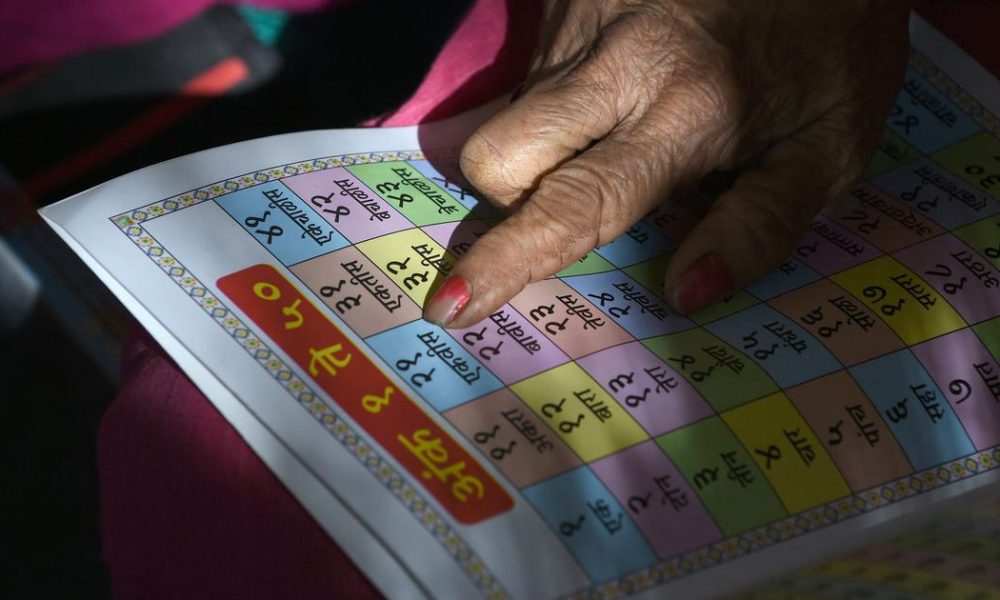
The discourse surrounding language and caste in India has taken a new turn with recent comments in response to an article discussing Marathi pronunciations. Some readers have expressed their discontent, arguing that associating linguistic variations with caste issues is unnecessary and divisive.
One reader, Vivek Joshi, expressed strong opposition to framing language differences as markers of caste. Joshi articulated that the article attempts to construct an unwarranted divide among people by suggesting that pronunciation nuances—like the hard and nasal ‘na’—are indicative of caste hierarchies. He likened this to regional biases observed in Karnataka, where dialects of Kannada are sometimes labeled as more ‘refined’ based on geographical differences. Joshi emphasized that language should serve as a bridge, fostering connection rather than division.
Adding to the conversation was Vasant Kalegaonkar, who argued that the distinctions between non-nasal and nasal pronunciations in Marathi are purely linguistic and have no correlation with caste. He pointed out that these variations are recognized in the Devanagari script used for Marathi, which encompasses different symbols for the two pronunciations. Kalegaonkar noted that languages spoken by other communities, such as Jains and Punjabis, also feature similar pronunciation traits, yet these communities do not uniformly identify as Brahmins. His insights stress the importance of separating linguistic diversity from caste assumptions.
From the perspective of non-Maharashtrian Brahmins, one reader shared their observations with a sense of detachment, suggesting that they can provide an unbiased view on the matter. They found the discussion both amusing and enlightening, indicating that interpretations of language are often clouded by preconceived notions of caste. This perspective sheds light on the broader cultural context, where people often associate linguistic features with social status, even in the absence of direct evidence.
The ongoing dialogue highlights the sensitivity surrounding caste and language in Indian society. As India moves towards a more nuanced understanding of identity, it is crucial for discussions around language and its implications to be handled thoughtfully. By recognizing linguistic diversity as a reflection of cultural richness rather than a tool for division, society can promote unity in its multifaceted identity. Balancing these conversations with sensitivity and open-mindedness will be key to fostering a more inclusive environment for all communities.
Source: scroll.in






No Comment! Be the first one.