

Unveiling the Shadows: A New Account of the Prelude to the First Kashmir War
As the summer of 1947 waned, the princely state of Jammu and Kashmir found itself under intense strain, a situation that deteriorated before the infamous tribal invasions. The decline in security was...

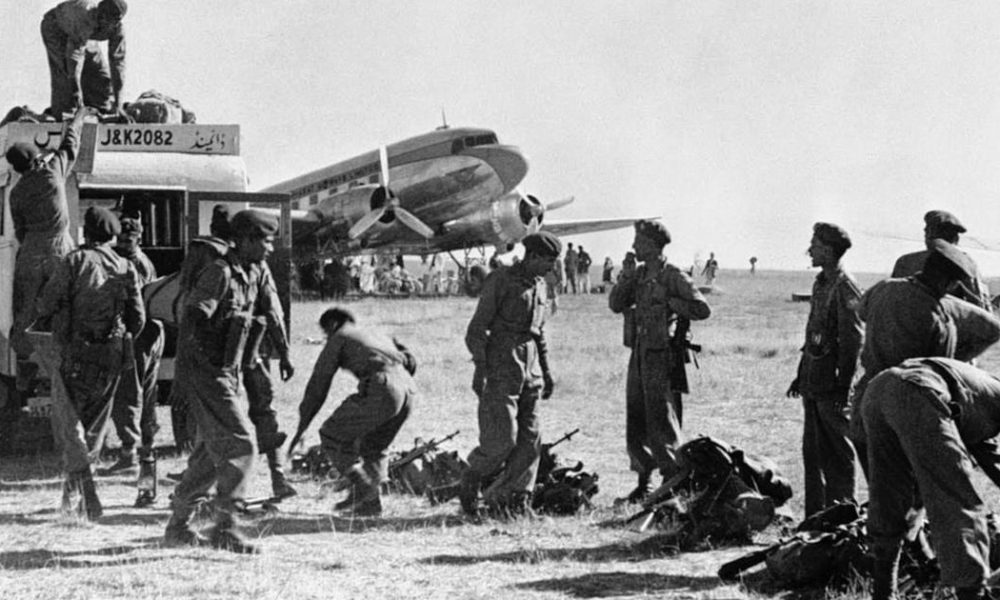
As the summer of 1947 waned, the princely state of Jammu and Kashmir found itself under intense strain, a situation that deteriorated before the infamous tribal invasions. The decline in security was not merely an isolated incident but rather a complex interplay of political mobilization, economic suppression, and clandestine military preparations that collectively weakened the state, making it susceptible to external threats.
The region’s instability was not uniformly spread; while the Kashmir Valley and Ladakh experienced relative calm during August and September of that year, the conditions in Jammu Province deteriorated at an alarming rate. The violence that erupted during the Partition in Punjab soon spilled over into Jammu, aggravated by the announcement of the Punjab Boundary Award on August 17, 1947. This led to a massive influx of refugees fleeing violence in West Punjab, particularly from the Hazara district, creating a humanitarian crisis that overwhelmed local administration and instigated cycles of violence.
This turmoil was not accidental or spontaneous. As communal tensions intensified, there was already a significant political and military mobilization targeting the state. In the Mirpur-Poonch area, a notable figure, Sardar Muhammad Ibrahim Khan, had been organizing ex-servicemen well before the formal Partition. Drawing on former soldiers from the British Indian Army, he aimed to establish a force capable of challenging the state’s sovereignty.
The narrative surrounding the events leading to the first Kashmir War is crucial for understanding the broader context of the region’s history and the complexities of its communal and political dynamics. This new book sheds light on the intricate relationships and the series of decisions that precipitated a conflict that would have long-lasting repercussions for both India and Pakistan.
As historians and analysts continue to dissect the circumstances of the era, this book not only provides an account of the military strategies employed but also offers insights into the socio-political landscape that shaped the actions of various stakeholders in Jammu and Kashmir. The conflict that ensued was not merely a battle for territory but a struggle deeply rooted in historical grievances, making this narrative essential for anyone looking to grasp the profound implications of the first Kashmir War.
Source: scroll.in





No Comment! Be the first one.