

Exploring Nonbinary Perspectives in Christianity from Late Antiquity to the Middle Ages
The discourse surrounding nonbinary identities has roots that extend back to the late Roman Empire and the Middle Ages, a period spanning approximately from 200 to 1400 CE. Christian thinkers,...

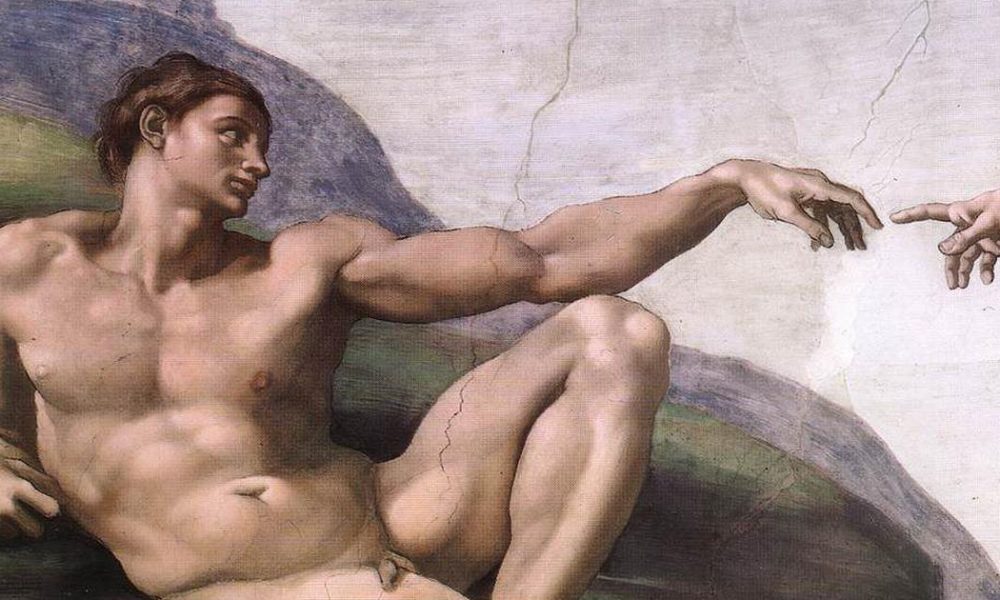
The discourse surrounding nonbinary identities has roots that extend back to the late Roman Empire and the Middle Ages, a period spanning approximately from 200 to 1400 CE. Christian thinkers, including theologians and scholars, often referenced biblical texts to explore the complex nature of humanity, especially in relation to nonbinary individuals. This exploration was not merely academic; it reflected deeper theological and societal questions about the essence of humanity and the criteria for salvation.
One of the seminal texts in this discussion is the Book of Genesis, which presents the creation narrative of Adam and Eve. Early interpretations of these texts suggested that Adam was not just the first man created by God but also hinted at a nonbinary essence. Some ancient translations of Genesis posited that Eve was formed from Adam’s side, illustrating a notion of primal androgyny, where the initial human state transcended the rigid categories of male and female. This interpretation brings forth the idea that the original human condition may not have adhered to contemporary gender binaries.
Such perspectives raise intriguing questions about the understanding of gender within Christian theology. For many early Christian scholars, including medieval science and gender historians like Leah DeVun, the notion of primal androgyny challenges the binary view of gender that has persisted into modern times. They argue that if Adam represented a unified being, the creation of Eve introduced a division that may not have been present in humanity’s original state. This line of thought invites reflection on whether androgyny could be viewed as the ‘natural’ state of humanity before the establishment of distinct gender roles.
As these discussions unfold, it is essential to recognize the impact of these theological ideas on societal perceptions of gender throughout the medieval period. The implications of viewing Adam as a nonbinary figure prompt a reevaluation of how gender was understood in early Christian contexts. This exploration reveals a rich tapestry of thought that suggests early Christianity was not monolithic in its views on gender and identity. By examining these historical perspectives, contemporary readers can gain insights into the evolving nature of gender discourse within religious frameworks.
In the Indian context, where discussions related to gender fluidity and nonbinary identities are gaining momentum, exploring these historical underpinnings can be particularly enlightening. The intersection of faith, culture, and identity continues to be a pivotal area of inquiry, as societies strive to understand and embrace diverse expressions of humanity. This historical examination not only highlights the complexities of Christian thought but also invites broader conversations about acceptance and understanding in contemporary times.
Source: scroll.in




No Comment! Be the first one.